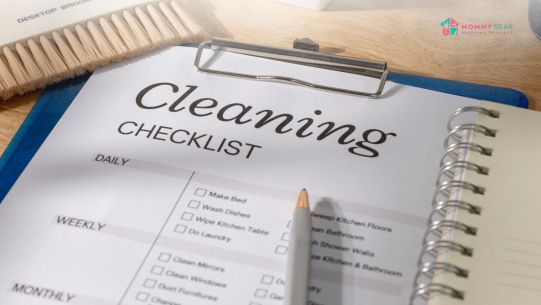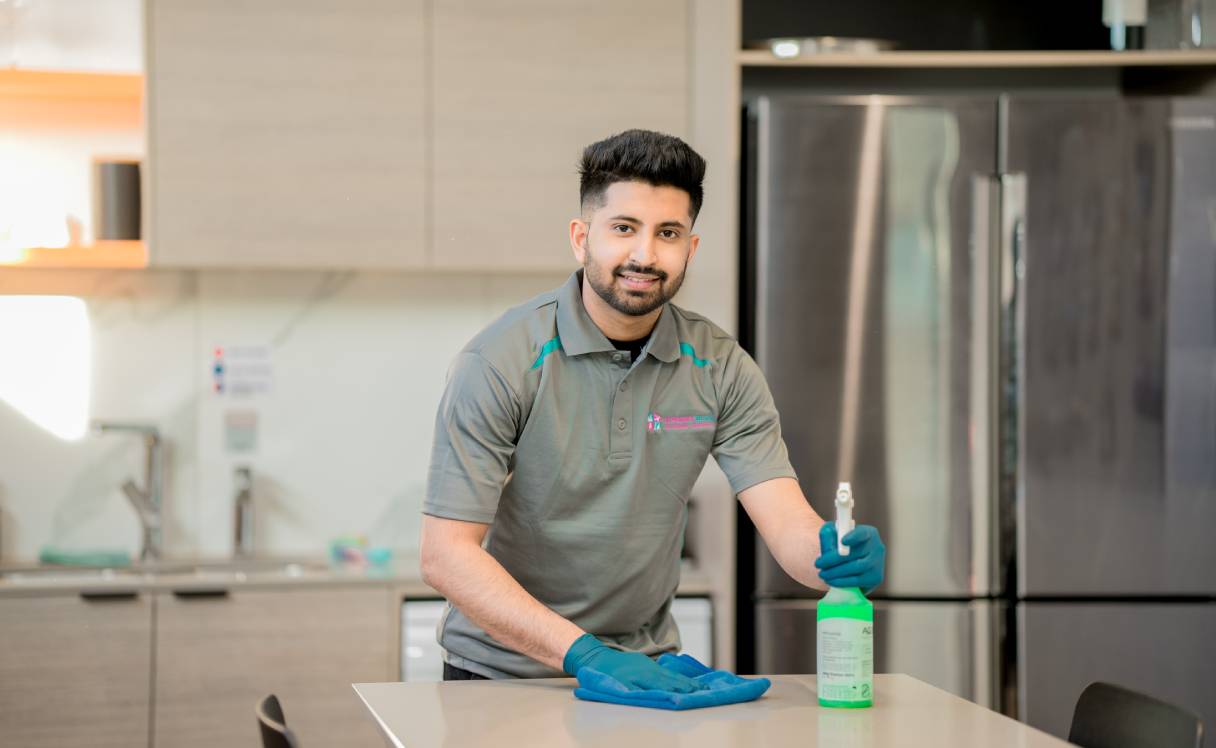

Fifteen minutes a day keeps the weekend cleaning marathon away. That’s not a slogan — it’s what happens when you follow a structured daily routine instead of letting mess accumulate until Saturday. This guide gives you the exact minute-by-minute system our professional cleaners use, adapted for busy families across Melbourne and Victoria who don’t have hours to spare but still want a home that feels clean every single day.
Every “quick cleaning routine” article online tells you to “wipe benchtops and do the dishes.” That’s not a system. That’s common sense dressed up as advice. What you actually need is a timed, sequenced routine with specific tasks assigned to specific minutes — one you can start tonight and repeat on autopilot within two weeks.
Here it is.
The 15-Minute Daily Reset: Minute by Minute
This routine is designed to be done once per day — either after dinner or before bed. It works for apartments in St Kilda, townhouses in Pakenham, and four-bedroom family homes in Berwick. Adjust the tasks to fit your home, but keep the time structure locked.
Minutes 1–3: Kitchen Surfaces (The Non-Negotiable Start)
The kitchen gets dirty faster than any other room. Starting here gives you the biggest visual impact in the shortest time.
- Wipe benchtops and stovetop with a damp microfibre cloth and all-purpose spray
- Load any remaining dishes into the dishwasher (or wash the last few by hand)
- Wipe the sink basin — a clean sink makes the entire kitchen feel reset
Why the kitchen first: After 15 years of cleaning Victorian homes, we can tell you that a dirty kitchen is the number one thing that makes an entire house feel messy. A clean kitchen does the opposite — it sets the psychological tone for the rest of the house, even if other rooms aren’t perfect.
Minutes 3–5: Floor Sweep (High-Traffic Zones Only)
You don’t need to sweep the entire house. Focus on the three areas where crumbs, dirt, and debris collect fastest.
- Kitchen floor (especially around the bin and under the edge of the island bench)
- Dining area (under and around the table)
- Entryway or mudroom (shoes track in Melbourne’s red-brown clay soil, construction dust from growth corridor developments, and seasonal pollen — this area cops it daily)
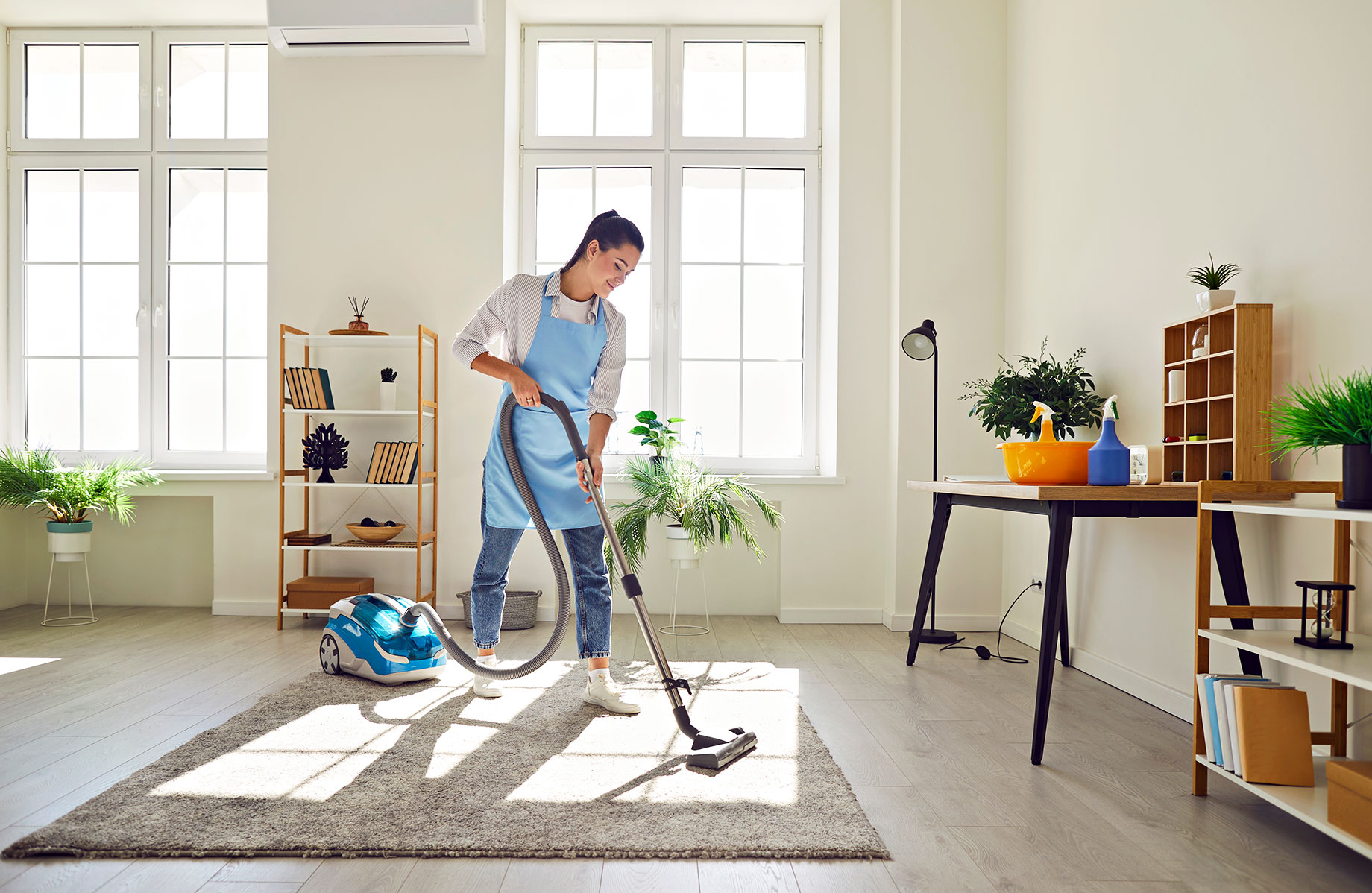
Use a cordless stick vacuum if you have one. It’s faster than a broom and picks up the fine dust that Melbourne’s climate constantly deposits on hard floors, especially during spring and the dry summer months.
Minutes 5–8: Bathroom Quick-Wipe (The 90-Second Rule)
You’re not deep cleaning the bathroom. You’re preventing buildup from gaining a foothold.
- Spray the shower screen with a daily shower spray after the last shower of the day (this alone prevents 90% of soap scum and hard water staining — a persistent issue across Melbourne’s south-east water supply)
- Wipe the vanity and basin with a microfibre cloth
- Quick swipe of the toilet seat and rim with a disinfectant wipe
That’s it. Three actions, 90 seconds. If you skip this step for a week, you’ll spend 30 minutes scrubbing on the weekend instead. The maths is unforgiving.
Minutes 8–11: Living Area Reset
The living room is where clutter multiplies. This step stops the avalanche.
- Pick up anything that doesn’t belong in the room — toys, shoes, cups, chargers, school bags — and put them in their designated spot (or in a “to sort” basket if you’re short on time)
- Straighten cushions and fold throws
- Quick wipe of the coffee table and any surface that collects daily clutter
For families with kids: The living room reset is the single best task to involve children in. Even toddlers can put toys into a basket. Primary school-age kids can handle cushions, folding, and surface clearing. It takes 60 seconds less when two people do it.
Minutes 11–13: Bedrooms (Beds + Surfaces)
- Make all beds (or ensure kids have made theirs — it doesn’t need to be hotel-perfect, just pulled together)
- Place any clothes in the laundry hamper rather than on the floor or chair
- One quick pass across bedside tables with a cloth
Making the bed is the most disproportionately impactful cleaning habit you can build. It takes 45 seconds but transforms how a bedroom looks and feels for the entire next day.
Minutes 13–15: Laundry Cycle + Bins
- Start or transfer a load of laundry (wash → dryer or line). One load per day keeps laundry from becoming a weekend mountain.
- Check main household bins — if any are full, take them out
Melbourne laundry tip: During Victoria’s wetter months (May through September), indoor drying racks and dryers become essential. If you’re running a load daily, factor in drying time or use a dehumidifier near your drying rack — this also helps reduce indoor humidity that feeds bathroom and laundry mould.
Why 15 Minutes Works (When Longer Routines Don’t)
The reason most cleaning routines fail isn’t laziness. It’s ambition.
People create elaborate 45-minute daily schedules, follow them for a week, then abandon them completely when life gets busy. A missed day turns into a missed week, and suddenly the house is back to square one.
Fifteen minutes works because of three psychological principles that behavioural researchers have documented:
The activation threshold is low. Telling yourself “I’ll clean for 15 minutes” creates almost zero mental resistance. Telling yourself “I’ll clean for an hour” triggers avoidance. The easier it is to start, the more consistently you’ll do it.
Small wins compound. A 15-minute reset done 7 days in a row keeps your home at a baseline cleanliness of 7-8 out of 10. A 3-hour clean done once a week lets your home drop to a 3 out of 10 by Friday — creating stress all week long.
Habits form through repetition, not duration. Research on habit formation shows that consistency matters more than time invested. Doing something small every day builds the neural pathway faster than doing something big once a week. After roughly 14-21 days, the 15-minute reset becomes automatic — you stop thinking about it and just do it.
Adapting the Routine for Victorian Conditions
Generic cleaning routines written for American or UK audiences miss the specific challenges Victorian homes face. Here’s how to adjust for local conditions:
Spring Pollen Season (September – November)
Melbourne’s pollen count regularly exceeds 50 grains per cubic metre during grass pollen season, which is classified as “high” by the Melbourne Pollen Count service. During these weeks, add one extra step to your daily routine: wipe windowsills and the entryway floor with a damp cloth. Pollen settles on horizontal surfaces near open windows and doors and redistributes every time someone walks past.
Construction Dust in Growth Corridor Suburbs
If you live in or near developing suburbs like Clyde North, Clyde, Cranbourne, Botanic Ridge, or Officer, fine construction dust enters your home constantly through gaps around doors and windows. During active building periods nearby, increase your entryway sweep from daily to twice daily and keep a doormat on both sides of your front door.
Melbourne’s Hard Water
Homes across the Cardinia Shire and south-east Melbourne corridor receive water with higher mineral content that leaves white residue on glass, taps, and shower screens. The daily shower spray step in this routine is critical — it only takes 10 seconds but prevents the hard water stains that otherwise require vinegar soaking and scrubbing to remove.
Winter Humidity and Mould
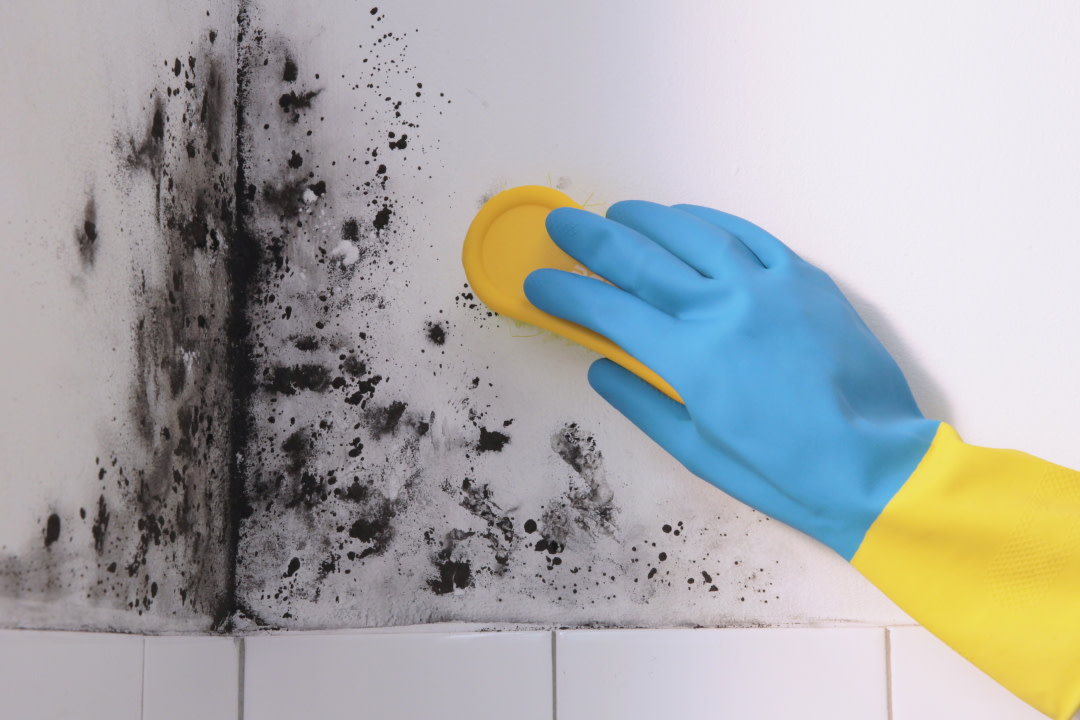
Melbourne’s winter brings cold mornings and warm showers — a combination that creates condensation on bathroom walls, window frames, and mirrors. During June through August, wipe condensation from bathroom surfaces and window frames as part of your daily routine. It adds 30 seconds to your bathroom step and prevents the black mould that forms within days if moisture sits.
The 5 Mistakes That Sabotage Every Cleaning Routine
After working with hundreds of families across Melbourne’s south-east, we see the same patterns over and over.
1. Starting too big. The most common mistake is trying to clean the entire house in one daily session. You burn out by Wednesday. Start with 15 minutes. If you consistently complete it for a month and want to add more, extend to 20. But not before.
2. Not assigning a specific time. “I’ll clean when I get a chance” means you won’t clean. Anchor your routine to an existing daily habit — immediately after dinner, right after the kids go to bed, or the moment you get home from the school run. The anchor makes it automatic.
3. Cleaning in random order. Without a sequence, you waste time deciding what to do next. Decision fatigue kills momentum. Follow the same order every day: kitchen → floors → bathroom → living room → bedrooms → laundry. Your brain stops thinking about it after a week.
4. Trying to deep clean during a daily routine. Your daily reset is surface-level maintenance. It’s not the time to scrub grout, clean inside the oven, or wash windows. Trying to squeeze deep tasks into a 15-minute routine guarantees you’ll go over time, feel frustrated, and quit. Save deep cleaning for monthly sessions — or bring in a professional.
5. Going solo when you don’t have to. In a family household, one person shouldn’t carry the entire routine. Split tasks: one person handles kitchen and floors, another handles living room and bedrooms. With two people, the whole routine drops to 7-8 minutes each. Kids handle toys and making their own beds. It’s a household system, not a solo burden.
When 15 Minutes Isn’t Enough (And What to Do About It)
A daily routine maintains your home at a good standard. But it won’t deep clean your oven, steam your carpets, scrub tile grout, or handle the buildup that accumulates in areas your daily routine doesn’t touch.
Here’s the honest breakdown of what daily cleaning handles and what it doesn’t:
Daily routine handles: Benchtop crumbs, general floor debris, bathroom surface soap scum, clutter, laundry flow, bed-making, visible tidiness.
Daily routine does NOT handle: Inside oven and fridge, behind and under appliances, window tracks and frames, ceiling fans, skirting boards, grout scrubbing, carpet deep-cleaning, rangehood filters, mould treatment, air conditioning vents.
This is where professional cleaning fills the gap. Most of our regular clients across Officer, Pakenham, Berwick, Narre Warren, and surrounding suburbs handle the daily 15-minute reset themselves and book us fortnightly to tackle the thorough clean that their routine can’t cover. It’s the combination that keeps homes genuinely clean — not just surface-tidy — without requiring hours of weekend effort.
Why Victorian Families Trust Mommy Bear Cleaning Services
We’re a family-owned cleaning company based in Officer, VIC. Not a franchise. Not a platform. A real local team that’s been cleaning homes across Melbourne’s south-east for over 15 years.
- Same cleaner every visit — your cleaner learns your home and your preferences
- 40-point professional checklist — covers everything your daily routine doesn’t
- Eco-friendly, child-safe, pet-safe products — non-toxic and VOC-free
- Police-checked and fully insured — every single team member
- 100% satisfaction guarantee — if it’s not right, we fix it at no charge
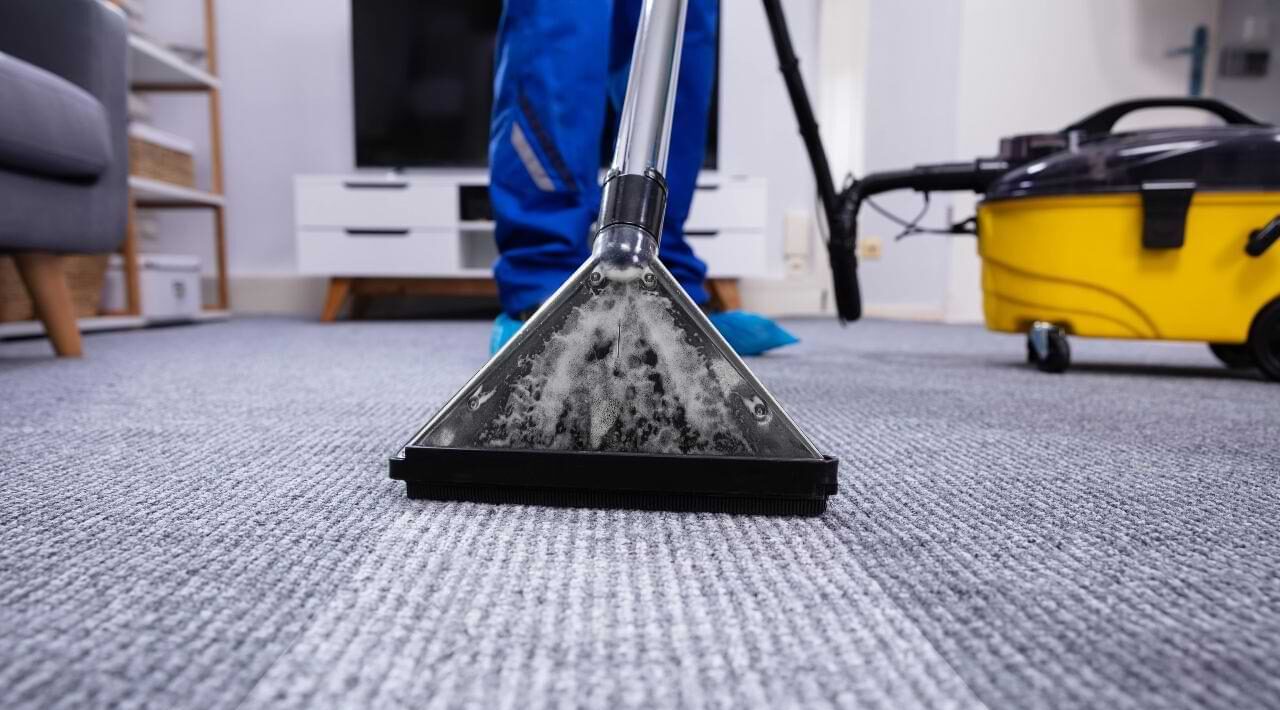
Whether you need fortnightly maintenance cleaning, a one-off deep clean, end-of-lease bond cleaning, or steam carpet cleaning, we’re here to handle the work that your 15-minute routine can’t.
📞 Call anytime: 0449 626 424 🌐 Free quote: mommybearcleaning.com.au/contact-us
Areas We Serve
Core service area: Officer, Pakenham, Berwick, Beaconsfield, Narre Warren, Narre Warren South, Cranbourne, Clyde, Clyde North, Hallam, Hampton Park, Endeavour Hills, Botanic Ridge, Dandenong, and Warragul.
Greater Melbourne: Abbotsford, Armadale, Bentleigh, Brighton, Brunswick, Carlton, Caulfield, Coburg, St Kilda, Elwood, Fawkner, Fitzroy, Glen Waverley, Greenvale, Hampton, Hawthorn, Highett, Malvern, Thomastown, Melbourne CBD, Middle Park, Newport, North Melbourne, Oakleigh, Pascoe Vale, Prahran, Reservoir, and Thornbury.
Frequently Asked Questions
Does a 15-minute routine actually keep a house clean?
Yes — if you do it consistently. A 15-minute daily reset prevents mess from accumulating, which means your home stays at a 7-8 out of 10 cleanliness level without weekend marathons. It won’t replace periodic deep cleaning, but it dramatically reduces the amount of heavy cleaning your home needs.
What time of day should I do my daily cleaning routine?
Whatever time you can commit to consistently. Most Victorian families find after dinner or just before bed works best because the kitchen is already in use and the day’s mess has accumulated. The specific time matters less than doing it at the same time every day.
Can kids help with a daily cleaning routine?
Absolutely. Children aged 3-5 can put toys in baskets and help make their beds. Ages 6-10 can handle surface wiping, cushion straightening, and laundry sorting. Teenagers can manage bathroom wipes and floor sweeping. Splitting the routine across the family cuts each person’s time to under 5 minutes.
How often should I still get a professional clean if I do daily maintenance?
Fortnightly professional cleaning is the sweet spot for most families who maintain a daily routine. This combination keeps your home at a consistently high standard without requiring you to spend your weekends on deep-cleaning tasks like oven degreasing, grout scrubbing, and skirting board wiping.
What cleaning products do I need for a daily routine?
Just three: an all-purpose spray, a daily shower spray, and a pack of microfibre cloths. That’s it for daily maintenance. Skip the expensive specialty products — they’re for deep cleaning, not daily resets.
Written by Himaya Hamy, founder of Mommy Bear Cleaning Services — helping busy Victorian families keep their homes clean without giving up their weekends since 2010. Based in Officer, VIC, proudly serving Melbourne and surrounding suburbs. Book your free quote today.