Maintaining a clean mattress is essential for promoting good health and ensuring a restful sleep, particularly in Australia’s diverse climate, which can facilitate the growth of allergens, dust mites, and bacteria. While many Australians regularly wash their bed linens, the mattress itself often remains neglected. Here, we delve into a thorough guide for cleaning your mattress, offering detailed methods and maintenance tips to keep it in top condition.
Why Cleaning Your Mattress Is Crucial
Despite the routine washing of sheets, mattresses accumulate various substances over time that can compromise your health and comfort, including:
- Sweat and Body Oils: As you sleep, your body releases sweat and natural oils that are absorbed into the mattress fabric.
- Dead Skin Cells: Humans shed millions of skin cells every night, providing a fertile environment for dust mites.
- Dust Mites and Allergens: These microscopic creatures thrive in bedding and mattresses, potentially exacerbating allergy symptoms and asthma.
- Spills and Stains: Accidental spills can lead to stains and unpleasant odours if not addressed promptly.
- Bacteria and Odours: Bacteria from sweat, spills, and pets can reside in the mattress, contributing to unpleasant smells and hygiene issues.
Regular cleaning not only helps to maintain your mattress but also:
- Improves Indoor Air Quality: A cleaner mattress contributes to healthier indoor air, vital for allergy sufferers.
- Reduces Allergy Symptoms: By removing allergens, you can minimise symptoms like sneezing and congestion.
- Extends Mattress Lifespan: Regular maintenance can help preserve the materials and quality of your mattress, prolonging its usability.
- Promotes Healthier Sleep: A hygienic sleeping environment fosters better rest and rejuvenation.
Experts recommend deep cleaning your mattress every six months, with light upkeep, such as vacuuming, performed monthly.
Step-by-Step: How to Clean a Mattress
Step 1: Strip the Bed Completely
Begin the cleaning process by removing all items from the bed:
- Sheets: Wash in hot water (as permitted by the fabric label) to eliminate allergens, bacteria, and dust mites.
- Pillowcases: Like sheets, these should also be washed regularly.
- Mattress Protector: If you use a waterproof mattress protector, ensure it is machine washable to help keep your mattress sterile.
- Mattress Topper: Remove any additional layers that sit atop the mattress for comprehensive cleaning.
Step 2: Vacuum the Mattress Thoroughly
Vacuuming is a pivotal step in mattress cleaning. To do it effectively:
- Use an Upholstery Attachment: This tool is designed to pick up dust and debris more effectively.
- Move Slowly Using Overlapping Strokes: Ensure that you cover all areas, moving at a steady pace to capture as much dust as possible.
- Focus on Seams, Edges, and Corners: Dust and allergens like to hide in these areas, so be thorough.
- Don’t forget the Sides: Dust can accumulate on the sides, so include them in your vacuuming routine.
This thorough approach will help remove visible debris and prepare the surface for any cleaning solutions you may apply.
Step 3: Spot Clean Stains
When dealing with stains, remember to blot rather than rub to avoid spreading the stain further. Here’s how to tackle common stains:
- For Sweat Stains: Combine 1 cup of hydrogen peroxide with 3 tablespoons of baking soda and a few drops of dish soap. Spray this solution lightly on the stain, let it sit for a moment, and then blot with a clean cloth. Ensure you avoid soaking the mattress, as excess moisture can lead to mould.
- For Urine Stains: An enzyme cleaner is the most effective option, as it breaks down the proteins in urine, eliminating odours at the source. First, blot up excess moisture, then apply the enzyme cleaner according to the manufacturer’s instructions. After the designated time, blot the area again and let it dry completely.
- For Blood Stains: Always use cold water, as hot water can set the stain. Gently blot the area with a cloth soaked in cold water and apply hydrogen peroxide as needed for stubborn stains, blotting again afterwards.
- For Vomit or Food Stains: Remove any solid remnants carefully. Then, mix a mild dish soap with cold water and blot the stained area gently. Ensure it dries completely afterwards.
Step 4: Deodorise the Mattress
After addressing any stains, deodorising your mattress is essential.
Baking Soda Method: Sprinkle a generous layer of baking soda evenly across the surface of the mattress. Allow it to sit for 4-12 hours, preferably overnight, as this time enables the baking soda to absorb moisture and neutralise any lingering odours. Afterward, vacuum the baking soda thoroughly from the mattress.
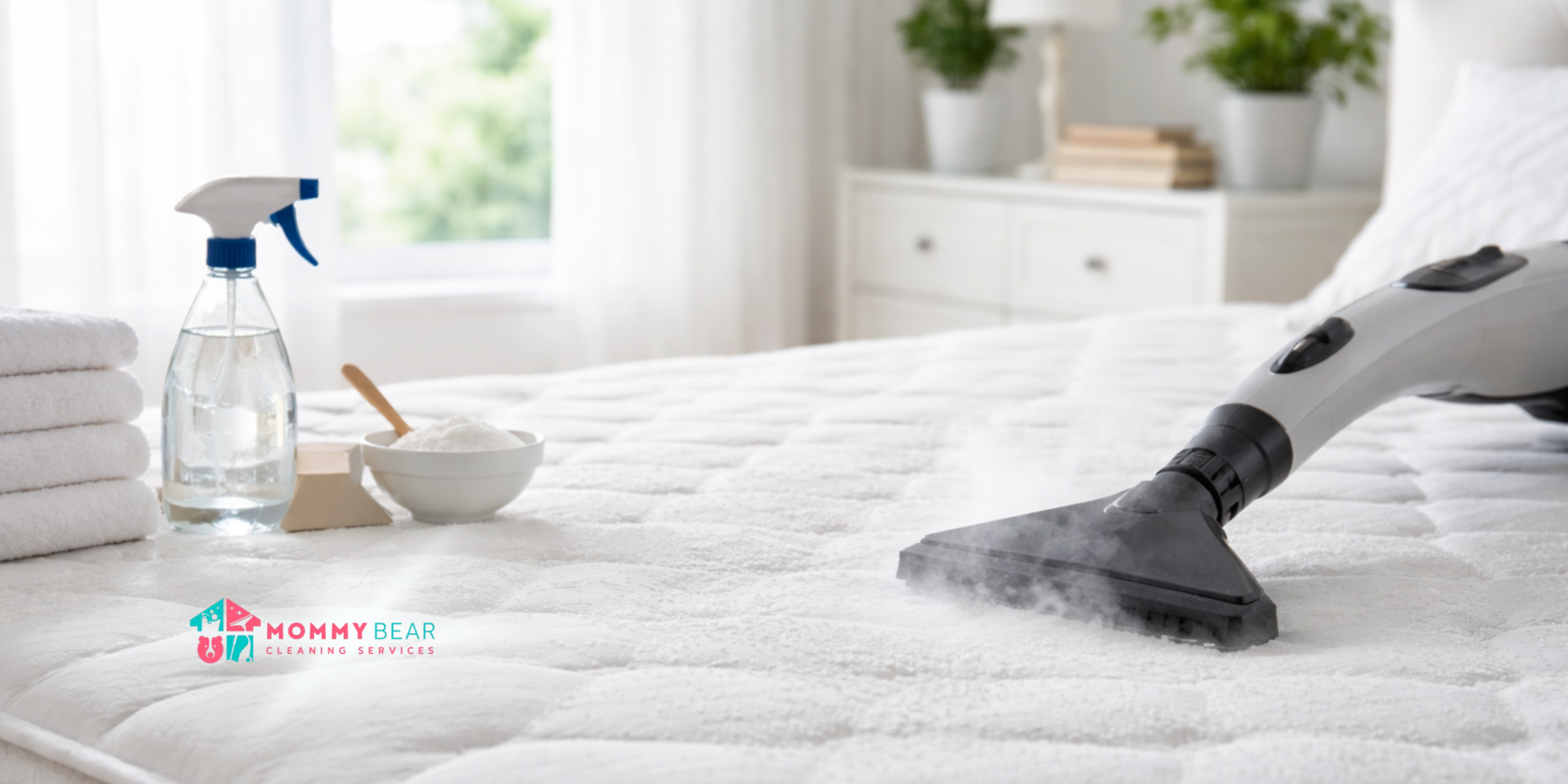
Step 5: Steam Clean the Mattress
Steam cleaning can significantly enhance sanitation but requires careful execution.
When to Steam Clean: Consider steam cleaning your mattress after illness, significant allergen exposure, persistent unpleasant odours, or every 6-12 months.
Steps for Safe Steam Cleaning:
1. Start by vacuuming the mattress to remove any loose debris.
2. Use a steam cleaner set on low moisture to prevent soaking the fabric.
3. Keep the steam nozzle moving continually across the surface; avoid pressing down too hard.
4. Ensure adequate ventilation during and after the process to facilitate quick drying.
Important Note: Memory foam mattresses should not be heavily steamed as retained moisture can lead to structural damage.
Drying the Mattress Properly
Proper drying is crucial in preventing mould growth and maintaining mattress integrity. Here are the best methods:
- Open Windows for Airflow: Fresh air circulation is vital for quick drying.
- Use Fans to Circulate Air: Position fans near the mattress to speed up the drying process.
Stand the Mattress Upright: This allows for airflow on all sides. - Consider a Dehumidifier: Particularly useful in humid conditions to draw moisture from the air.
- Place in Indirect Sunlight: Sunlight helps kill bacteria, but avoid direct exposure that might fade the fabric.
Drying time can vary widely, lasting anywhere from 6 to 24 hours, depending on humidity levels and airflow. Do not replace your bedding until the mattress is completely dry.
How Often Should You Clean Your Mattress?
- Monthly: Vacuum to gather dust and allergens.
Every Six Months: Execute a thorough deep clean. - Once or Twice Per Year: Steam clean to eliminate deeper-seated dirt and allergens.
- Immediately After Spills: Prompt attention to spills prevents stains and odours.
Preventive Tips to Maintain a Clean Mattress
To reduce the frequency of deep cleans and maintain freshness, consider implementing these preventive strategies:
- Use a Waterproof Mattress Protector: This barrier helps to shield against spills and bodily fluids.
- Wash Bedding Weekly: Keeping linens fresh plays a crucial role in overall mattress hygiene.
- Rotate the Mattress Every Three Months: This promotes even wear and helps maintain shape.
- Control Indoor Humidity: Using a dehumidifier can reduce dust mites and mildew.
Avoid Eating in Bed: Limiting food in bed helps to prevent accidental spills and stubborn stains.
These preventative measures can drastically reduce the frequency of deeper cleaning sessions while keeping your mattress fresh and hygienic.
Frequently Asked Questions (FAQs)
1. How do you deep clean a mattress at home?
– To deep clean, thoroughly vacuum, treat stains with suitable solutions, deodorise with baking soda, optionally steam clean, and ensure comprehensive drying before use.
2. Can you safely steam clean a mattress?
– Yes, but only with low-moisture steam, and ensure complete drying. Avoid heavy steaming on memory foam mattresses to prevent damage.
3. How long does it take for a mattress to dry after cleaning?
– Drying time typically ranges from 6 to 24 hours, depending on environmental conditions. Ensure total dryness before adding sheets back on.
4. Does baking soda really clean a mattress?
– While baking soda does not disinfect, it effectively absorbs moisture and neutralises odours, making it a valuable tool post-vacuuming and stain treatment.
5. How do you remove urine smell from a mattress?
– An enzyme cleaner is considered the most effective solution, as it breaks down urine proteins to eliminate the odour entirely.
6. How often should I clean my mattress?
– Vacuum monthly, deep clean every six months, and address spills or illness promptly for best results.
Final Thoughts
Understanding how to clean your mattress properly is paramount for maintaining a healthy sleeping environment. By following these systematic steps and preventative measures, you can enhance your sleep quality and extend your mattress’s lifespan. Incorporate this cleaning routine into your home care practices to enjoy a fresher and healthier mattress for years to come!