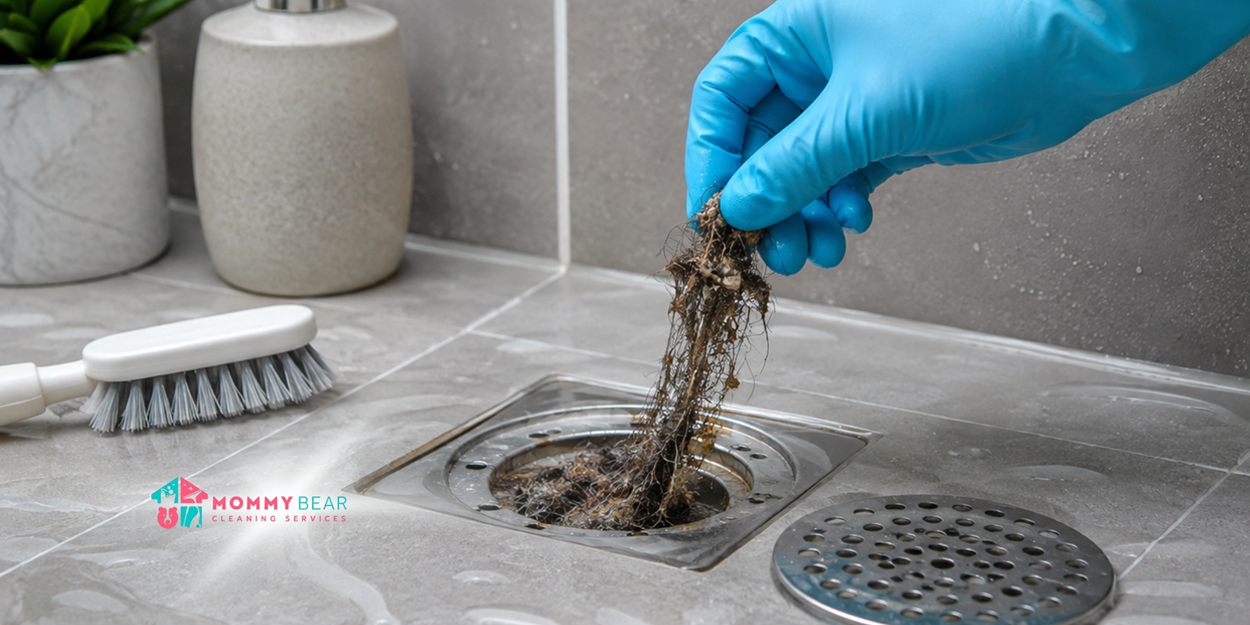
To clean a shower drain at home, put on gloves, remove the drain cover only if it lifts or unscrews easily, pull out visible hair with tweezers or a plastic hair-removal tool, scrub the cover and accessible drain opening with warm soapy water, then rinse with hot tap water and test the flow.
Start with physical cleaning rather than pouring products into the drain. A compact clump of hair, conditioner, soap residue and body oils needs to be pulled out. Liquid treatments may move around it without removing the actual obstruction.
Never force a fixed drain cover, use a sharp wire coat hanger, pour boiling water into an unknown drainage system or mix different cleaning products.
First, Identify What Is Making the Shower Drain Dirty
Not every slow or smelly shower drain needs the same cleaning method. Before reaching for a product, look at what is happening around the drain.
| What you notice | Likely issue | Best first step |
|---|---|---|
| Visible hair around the grate but normal drainage | Routine surface buildup | Remove the hair and clean the grate |
| Water drains slightly slower than usual | Hair and product residue near the opening | Remove the cover and pull out accessible debris |
| Water briefly pools around your feet | A larger hair or soap buildup | Repeat manual removal and clean the accessible drain walls |
| Slimy residue beneath the grate | Soap, body oils and biofilm | Scrub the grate and drain opening with warm soapy water |
| Musty smell close to the drain | Organic residue beneath the cover | Clean the underside of the grate and surrounding waste |
| Drain cover will not lift easily | Fixed, screw-mounted or specialist design | Clean through the openings without forcing the cover |
| Several household fixtures are backing up | Problem beyond accessible shower cleaning | Stop DIY cleaning and arrange a drainage inspection |
| A chemical drain product has already been used | Possible chemical exposure risk | Do not add products, insert tools or plunge the drain |
This quick check prevents you from using a complicated method when the problem may simply be a clump of hair sitting directly beneath the grate.
Why Shower Drains Become Slow and Smelly
Hair is usually the starting point of an everyday shower drain buildup. Loose strands catch around the grate, screws, edges or rough surfaces inside the drain opening.
The hair then combines with:
- Shampoo and conditioner residue
- Soap and body wash
- Body oils
- Dead skin
- Shaving products
- Cosmetic products
- Dirt and mud
- Pet hair, if animals are washed in the shower
Together, these materials form a sticky mass that catches even more debris each time the shower is used.
The underside of the drain cover can also develop a slimy coating. This may include biofilm, which is a layer of microorganisms attached to damp organic residue. It often develops in sheltered areas that remain wet but are rarely scrubbed.
That is why a shower floor can look clean while the drain still smells. The hidden underside of the grate and the accessible drain walls may not have been cleaned for months.
What You Need to Clean a Shower Drain
Gather the following before you begin:
- Rubber or disposable gloves
- A torch
- Tweezers or needle-nose pliers
- A plastic barbed hair-removal tool
- A small soft nylon brush
- Mild dishwashing liquid
- A bowl or bucket of warm water
- A soft microfibre cloth
- A rubbish bag
- The correct screwdriver, if the grate is visibly screw-fixed
- A small cup plunger, if needed
Use a purpose-made plastic drain tool rather than a bent wire coat hanger. A coat hanger can scratch the drain, become stuck, damage a finish or push the obstruction deeper.
Important Safety Check Before You Start
Ask whether anyone has recently poured a commercial drain cleaner, bleach, toilet cleaner or another chemical product into the drain.
If the answer is yes—or you are uncertain—do not add bicarb, vinegar or another cleaner. Do not put your hand into the drain, insert a tool or use a plunger until the product’s label directions have been followed.
Drain cleaners are considered high-risk household products. Always use cleaning products according to their labels, ventilate the bathroom and keep children and pets away from the area. If someone is exposed to a cleaning chemical, the Australian Poisons Information Centre can be contacted on 13 11 26. Call 000 if someone collapses or is not breathing.
How to Clean a Shower Drain Step by Step
Step 1: Remove Any Standing Water
If water is sitting around the drain, allow it to clear before you begin.
If it is only a small amount, remove the remaining water with a cup, sponge or old towel. This will help you see the grate properly and reduce splashing while you work.
Do not continue running the shower when the base is already filling.
Step 2: Inspect the Drain Cover
Australian showers can have several different drain designs, including:
- Round lift-out grates
- Square floor grates
- Screw-fixed covers
- Tile-insert drains
- Long linear shower channels
- Covers that require a supplied lifting key
Look for visible screws, a lifting point or a clear removable insert.
A round or square grate may lift straight out. A screw-fixed cover should be removed only with the correct screwdriver. Tile-insert and linear drains may have a separate lifting method recommended by the manufacturer.
Do not place a screwdriver beneath the edge and lever against the tiles. Do not bend the grate or cut through sealant simply because the cover looks removable.
For many drain finishes, warm soapy water and a soft cloth are safer than harsh, acidic or abrasive products. Stormtech, an Australian linear-drain manufacturer, also warns that vinegar and acidic cleaners can damage certain stainless-steel and coated finishes. Always check the instructions for your particular drain.
Step 3: Pull Out Visible Hair
Put on gloves and shine a torch into the drain opening.
Use tweezers, needle-nose pliers or a plastic barbed drain tool to catch the visible hair. Pull upwards slowly so the whole clump comes towards you.
Do not push the tool forcefully into the pipe. The goal is to remove debris from the accessible upper section, not to work deep inside the drainage system.
Place everything you remove directly into a rubbish bag. Do not wash the hair back down the drain or flush it through another household fixture.
Hair removal is the most important step. Bicarb, vinegar, hot water and scented cleaners cannot replace the physical removal of a thick hair mass.
Step 4: Clean the Drain Cover
Place the removable grate in warm water with a small amount of dishwashing liquid.
Use a soft brush to clean:
- The top surface
- The drain slots
- The edges
- Screw holes
- The underside of the grate
- Any removable hair catcher
Pay particular attention to the underside. Hair, conditioner and slimy residue commonly collect there even when the visible surface appears clean.
Rinse the grate with clean water and place it on a towel while you clean the drain opening.
Step 5: Scrub the Accessible Drain Opening
Add a small amount of mild dishwashing liquid to a soft brush or cloth.
Clean the visible rim and the accessible sides immediately beneath the grate. Work only as far as you can comfortably and safely reach.
The aim is to remove the slippery coating that traps odour and catches new hair. Physical agitation from the brush is more useful here than simply pouring a fragranced cleaner over the surface.
Avoid metal scourers, abrasive powders and harsh acids unless the drain manufacturer specifically approves them.
Step 6: Rinse With Hot Tap Water
After removing the hair and scrubbing the surfaces, run hot tap water into the drain for approximately 30 to 60 seconds.
Hot tap water helps rinse away loose soap and cleaning residue without exposing unknown seals, fittings or finishes to kettle-boiling water.
Boiling water is not necessary for routine shower drain cleaning. Drain materials and installations vary, so hot water directly from the tap is the more cautious general option.
Step 7: Replace the Cover and Test the Flow
Return the grate to its original position and tighten any screws gently.
Run the shower for a short period and watch how the water behaves.
A successful clean should result in:
- Water clearing more quickly
- Less pooling around the drain
- Reduced musty odour
- No visible hair around the grate
- A cleaner drain cover and surrounding floor
If the flow has improved but remains slightly slow, turn off the shower and repeat the hair-removal step. A second pass often catches strands missed the first time.
Step 8: Use a Small Cup Plunger Only If Needed
A cup plunger may help with a minor remaining restriction when the drain opening allows a proper seal.
Only use a plunger when no chemical product is present.
Add enough water to cover the plunger’s rim, position it directly over the drain and make several controlled up-and-down movements. Avoid excessive force.
Remove the plunger and test the water again. If there is no improvement, do not keep repeating increasingly aggressive DIY methods.
How to Clean a Shower Drain Without Removing the Cover
You can clean a shower drain without removing the cover, but you may not reach all the hair and residue underneath it.
Start by removing visible hair from the top of the grate. Scrub the slots and surrounding edges with warm soapy water and a soft brush.
A narrow plastic hair-removal tool may be inserted through a suitable opening, provided it moves freely and can be withdrawn easily. Pull any captured debris upwards and place it in the rubbish.
Finish by rinsing with hot tap water.
If the cover appears fixed, sealed or difficult to move, leave it in position. Forcing it can scratch the finish, loosen surrounding tiles or damage the drain fitting.
Does Bicarbonate of Soda and Vinegar Clean a Shower Drain?
Bicarbonate of soda and vinegar create visible fizz, but they should not be the first treatment for a shower drain.
The reaction produces carbon dioxide gas, water and sodium acetate. The bubbles may disturb light loose residue, but the reaction does not physically pull out a compact clump of hair. The fizz is not proof that the blockage is dissolving.
For an everyday shower drain, the more reliable order is:
- Remove visible hair.
- Scrub the grate.
- Clean the accessible drain opening.
- Rinse with hot tap water.
- Test the flow.
Some coloured, electroplated and stainless-steel drain finishes should not be exposed to vinegar or other acidic cleaners. Check the manufacturer’s care instructions before using any homemade treatment.
Never add vinegar when bleach, a commercial drain cleaner or another unknown product may already be present.
Can You Pour Bleach Down a Shower Drain?
Bleach should not be used as a routine solution for hair, soap buildup or a slow shower drain.
It does not remove a physical hair clog, and it can create a serious chemical hazard when combined with vinegar, acidic products, ammonia-containing cleaners or other incompatible products.
Never pour multiple products into the same drain hoping that a stronger reaction will work better. Use one suitable product only, follow its label exactly and rinse only as directed by the manufacturer.
For routine maintenance, physical hair removal and warm soapy water are usually simpler and more controlled.
How to Get Rid of a Musty Shower Drain Smell
A musty shower drain smell commonly comes from hair, soap residue and slimy buildup sitting beneath the grate.
To remove the smell:
- Remove and clean both sides of the drain cover.
- Pull out all accessible hair.
- Scrub the visible drain walls.
- Rinse with hot tap water.
- Clean the surrounding shower floor.
- Allow the bathroom to dry properly.
If the shower has not been used for an extended period, run water for approximately one minute and monitor whether the smell improves.
Do not rely only on perfumes, essential oils or fragranced cleaners. They may temporarily cover the smell while leaving the residue in place.
Stop DIY cleaning if the odour is strongly sewage-like, returns immediately after cleaning, affects several drains or is accompanied by water backing up.
How Often Should You Clean a Shower Drain?
The right frequency depends on how often the shower is used and how much hair and product enters the drain.
A practical starting schedule is:
After each shower
Pick up loose hair from the shower floor and empty the hair catcher when required.
Once a week
Inspect the drain grate, remove visible hair and wipe the top surface.
Every two to four weeks
Remove the grate where appropriate and clean its underside, the hair catcher and the accessible drain opening.
Busy family bathrooms, households with long hair and showers used for washing pets may need this deeper clean more frequently.
For rarely used showers
Run the water regularly, inspect the drain monthly and clean it whenever residue or odour becomes noticeable.
You do not need to wait for a fixed date. A change in drainage speed, visible hair, pooling water or a musty smell means it is time to clean the drain.
How to Prevent a Shower Drain From Clogging Again
The easiest blockage to manage is the one that never gets the chance to form.
Use a compatible hair catcher
Choose a hair catcher that fits the drain without slowing normal water flow. Empty it frequently rather than waiting for a thick mat to form.
Remove loose hair immediately
Pick hair up from the shower floor after use instead of washing it towards the grate.
Brush long hair before showering
Removing already-loose strands before getting into the shower can reduce the amount entering the drain.
Clean beneath removable grates
Wiping only the visible top allows grime to remain hidden underneath. Include the grate’s underside in routine bathroom cleaning.
Keep the entire shower clean
Soap scum on the screen, conditioner on the floor, dirty grout and residue around the drain all contribute to the shower’s overall buildup.
Avoid washing heavy debris into the drain
Remove large amounts of mud, pet hair and other solid material before rinsing the shower.
Respond when drainage first slows
A five-minute clean when the water first begins draining slowly is easier than dealing with a dense buildup later.
Common Shower Drain Cleaning Mistakes
Avoid these common errors:
- Pouring products into the drain before removing visible hair
- Forcing a drain cover that is not designed to lift out
- Using a sharp metal coat hanger
- Scratching stainless-steel or coated grates with an abrasive scourer
- Pouring kettle-boiling water into an unknown drain system
- Mixing bicarb and vinegar with other cleaning products
- Adding bleach after using vinegar
- Plunging a drain that may contain a chemical cleaner
- Pushing captured hair farther into the drain
- Cleaning the top of the grate but ignoring the underside
- Masking odour without removing the residue causing it
Frequently Asked Questions
What is the best thing to clean a shower drain with?
The best starting combination is gloves, tweezers or a plastic hair-removal tool, a soft brush, mild dishwashing liquid and hot tap water. Remove the physical hair first, then scrub the grate and accessible drain opening.
How do I remove hair from a shower drain?
Lift the cover if it is designed to come off, then use tweezers, needle-nose pliers or a plastic barbed drain tool to pull the hair upwards. Work slowly and place the removed material in the rubbish.
Can I clean a shower drain without taking it apart?
Yes. Remove visible hair from the grate, scrub through the openings with a soft brush, use a narrow plastic hair tool where it fits easily and rinse with hot tap water. However, you may not reach residue attached to the cover’s underside.
Does bicarb and vinegar dissolve hair?
No. Bicarb and vinegar create a fizzy chemical reaction, but they do not reliably dissolve a dense hair mass. Pull the hair out physically before considering any maintenance treatment.
Can I pour boiling water down the shower drain?
Hot tap water is the more cautious general choice. Drain materials, seals, fittings and finishes vary, and boiling water is unnecessary after the hair and surface residue have been removed.
Why does my shower drain still smell after cleaning?
Residue may remain beneath the grate or along the accessible drain walls. Remove the cover again, clean both sides, pull out missed hair and scrub the opening rather than relying only on a deodorising product.
Why does my shower drain keep becoming slow?
Recurring slow drainage usually means hair is continuing to pass through the grate, the hair catcher is not being emptied often enough, or some of the original buildup remains. Increase the inspection frequency and clean beneath the grate rather than only wiping the top.
How often should a shower drain be cleaned?
Inspect the grate weekly and perform a more detailed accessible clean approximately every two to four weeks. Shared bathrooms, long hair and frequent product use may require more regular attention.
Give the Whole Shower a Proper Reset
Cleaning the drain grate is only one part of maintaining a fresh bathroom.
If the water is flowing normally but the shower screen is cloudy, grout has darkened, limescale is building up around the tapware or the floor needs more detailed attention, the entire bathroom may benefit from a deeper clean.
Mommy Bear Cleaning is a family-owned cleaning company based in Officer, serving homes throughout Melbourne’s south-east. Its professional deep cleaning in Officer covers shower screens, tiles, grout, tapware, bathroom floors, exhaust-fan grilles and other commonly overlooked areas.
The team has more than 15 years of local cleaning experience and provides detailed residential cleaning across Officer, Pakenham, Beaconsfield, Berwick, Clyde North, Narre Warren and surrounding suburbs.
For a complete bathroom or home refresh, book a professional deep clean or a one-off house clean with Mommy Bear Cleaning.