A dishwasher is meant to clean your dishes – but if the machine itself is dirty, it can’t do its job properly. Food scraps, grease, detergent residue and hard-water minerals slowly build up inside your dishwasher. Over time, this can lead to bad smells, cloudy glasses, greasy plates and poor cleaning results.
The good news? Cleaning a dishwasher is easy when you know what to do and how often to do it.
In this guide, we’ll walk you through how to clean a dishwasher properly, step by step – including daily habits, weekly maintenance, and a monthly deep clean – using safe methods suitable for homes.
Why You Should Clean Your Dishwasher Regularly
If a dishwasher isn’t cleaned regularly, you may notice:
A bad or musty smell when you open the door
Food particles are stuck at the bottom of the machine
Grease left on plates and glassware
White marks caused by mineral build-up (hard water)
Clogged spray arms or a poorly draining dishwasher
In more serious cases, a dirty dishwasher can harbour bacteria or mould and may stop working efficiently.
Regular cleaning keeps your dishwasher:
Smelling fresh
Running efficiently
Cleaning dishes properly
Lasting longer
How Often Should You Clean a Dishwasher?
For best results, follow this simple schedule:
After every load: Remove visible food scraps
Weekly: Clean the filter and wipe the door and gasket
Monthly: Run a deep cleaning cycle
As needed: Clean the exterior and controls
Sticking to this routine prevents heavy build-up and avoids costly repairs later.
What You’ll Need
Most of these items are already in your home:
Microfibre cloth or soft sponge
Old toothbrush
Warm soapy water
White vinegar or a dishwasher cleaner
Baking soda
Gloves (optional)
Avoid abrasive scrubbers or harsh chemicals that can damage the dishwasher’s interior.
Step 1: Remove Food Debris (After Every Load)
Food scraps trapped inside the dishwasher are the most common cause of bad odours.
After each wash:
Open the dishwasher and check the bottom for food bits
Remove any debris using a paper towel or cloth
Check around the filter area for labels, seeds or bones
Expert tip: Always scrape excess food from plates before loading them. If you’re not running the dishwasher straight away, rinse dishes or use the rinse cycle.
Step 2: Wipe the Door and Rubber Gasket (Weekly)
The door edges and rubber seal trap moisture, grease and food splashes.
To clean:
Dip a cloth or sponge in warm, soapy water
Wipe the inside of the door, edges and handle
Use an old toothbrush to gently scrub the rubber gasket
Dry with a clean cloth
This helps prevent mould, bacteria and lingering smells.
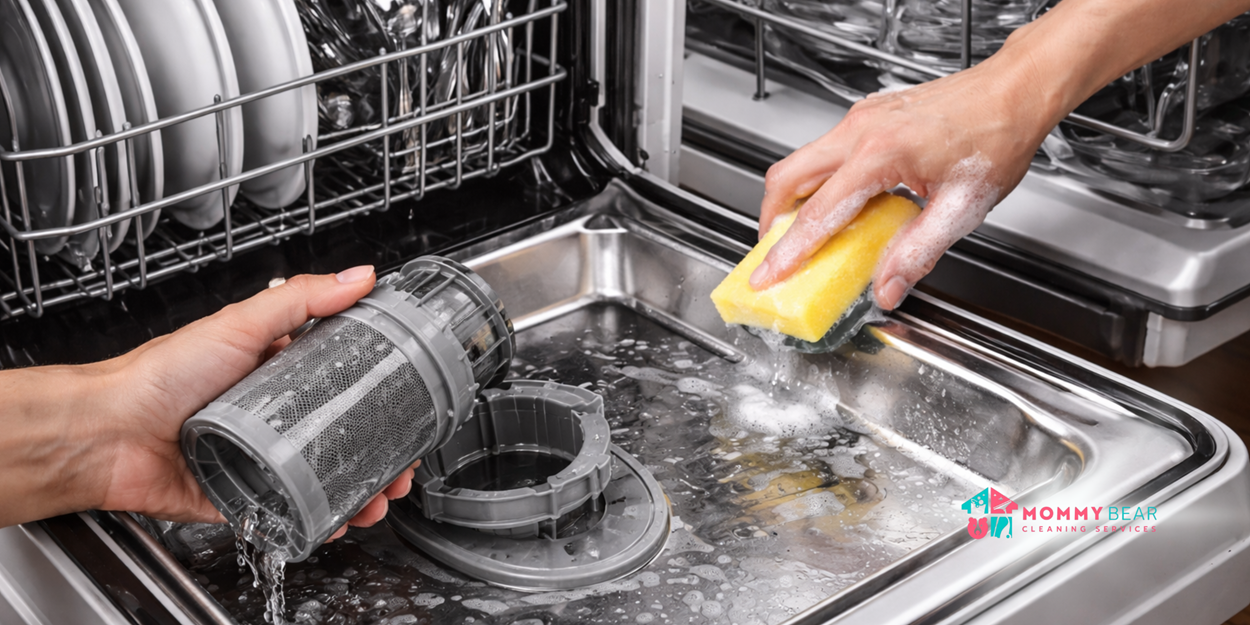
Step 3: Clean the Dishwasher Filter (Weekly)
The filter catches food particles and grease – if it’s blocked, your dishwasher won’t clean properly.
To clean the filter:
Pull out the bottom rack
Locate and unlock the filter (usually at the base)
Rinse it under hot running water
Use a soft toothbrush to remove grease and debris
Refit the filter securely before using the dishwasher
⚠️ Important: Never run the dishwasher without the filter properly locked in place.
Step 4: Clean the Spray Arms (Monthly)
Spray arms push water through small holes. If these holes are blocked, water won’t reach your dishes.
Remove the spray arms (check your manual if unsure)
Rinse them under warm water
Use a toothpick or soft brush to clear clogged holes
Reattach and ensure they spin freely
This step improves cleaning power significantly.
Step 5: Run a Deep Cleaning Cycle (Monthly)
A deep clean removes hidden grease, detergent residue and mineral build-up.
Option 1: Use a Commercial Dishwasher Cleaner (Recommended)
Make sure the dishwasher is empty
Follow the product instructions
Run the hottest cycle
These cleaners are designed to safely clean internal parts and are ideal for regular maintenance.
Option 2: Clean Dishwasher with Vinegar
Place a dishwasher-safe bowl with 1 cup of white vinegar on the top rack
Run a hot, heavy cycle with no dishes or detergent
Option 3: Vinegar + Baking Soda (Extra Freshness)
After the vinegar cycle:
Sprinkle 1 cup of baking soda across the bottom
Run a short hot cycle
This helps deodorise the dishwasher and remove mild stains.
Can You Clean a Dishwasher with Bleach?
No. Bleach is not recommended, especially for stainless steel dishwashers.
Never mix bleach with vinegar – this creates dangerous chlorine gas.
Bleach can also damage seals and internal parts over time.
Cleaning the Dishwasher Exterior
Wipe the control panel and door with a damp microfibre cloth
For stainless steel, use a stainless-steel cleaner and wipe with the grain
Avoid abrasive pads that can scratch the surface
Tips to Keep Your Dishwasher Clean for Longer
Leave the door slightly open after cycles to let moisture escape
Use a quality detergent suitable for Australian water conditions
Clean spills and splashes as they happen
Descalcify monthly if you live in a hard-water area
Final Thoughts
Cleaning your dishwasher doesn’t take much time, but it makes a big difference. With a few weekly habits and a monthly deep clean, your dishwasher will stay fresh, efficient and reliable — giving you cleaner dishes every time.
If you’d rather leave appliance cleaning to the professionals, a regular home cleaning service can take care of dishwasher maintenance as part of a deep kitchen clean.