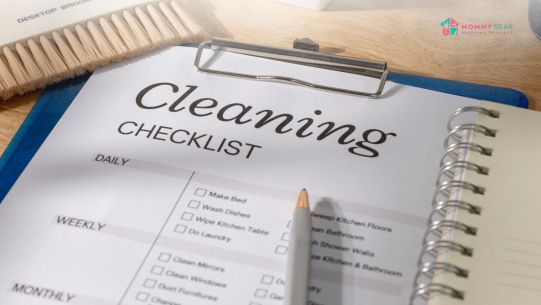
Most house cleaning checklists fail for the same reason: they list 97 tasks, give no order, no priority, and no indication of which ones actually matter. You read them, feel overwhelmed, and clean the kitchen the same way you always have.
This list is different. It’s organised by room and by frequency — daily tasks that take seconds, weekly tasks that take minutes, monthly tasks that prevent buildup, and seasonal tasks that keep your home genuinely clean rather than just surface-tidy.
Every task comes from 15 years of cleaning Australian family homes professionally. Not theoretical. Not copied from a US cleaning blog that tells you to “clean your furnace ducts.” These are the tasks that keep real Victorian homes clean — homes with pets, kids, pollen, hard water, and the specific conditions that affect how Australian households actually get dirty.
Use the daily and weekly lists to maintain your home between professional cleans. Use the monthly and seasonal lists for your deep cleaning schedule. Or hand the entire list to us and we’ll handle every line item with our 40-point professional checklist.
📞 Call Himaya: 0449 626 424
Before You Start: The Three Rules That Make Cleaning Faster
After cleaning over a thousand homes, we’ve learned that how you clean matters more than how hard you clean. These three principles cut cleaning time by a third.
Work top to bottom, back to front. Dust falls. If you clean the floor first then dust the shelves, you clean the floor twice. Start at ceiling level (cobwebs, fan blades, tops of cabinets) and work down to floor level. Within each room, start at the wall farthest from the door and work toward the exit.
Dry tasks before wet tasks. Vacuum before mopping. Dust before wiping. Dry cleaning collects loose particles that wet cleaning would otherwise turn into smeared grime.
Carry your supplies. A cleaning caddy with your core products — all-purpose spray, glass cleaner, microfibre cloths, scrubbing brush — saves you walking back to the laundry twelve times. Professionals carry everything. You should too.
Daily Tasks (5-10 Minutes Total)
These are not deep cleaning. These are the maintenance habits that prevent mess from compounding. Skip them for a week and your home takes an hour to recover. Do them daily and your house stays at a 7 out of 10 without effort.
Kitchen (3 minutes)
- Wipe benchtops and stovetop after the last meal of the day
- Load the dishwasher or wash remaining dishes — never leave the sink full overnight
- Wipe the sink basin once dishes are cleared
Bathrooms (90 seconds)
- Squeegee or spray the shower screen after the last shower (this alone prevents 90% of soap scum buildup)
- Wipe the vanity and basin
Living Areas (2 minutes)
- Pick up items that don’t belong in the room — shoes, toys, cups, bags — and return them to their designated spot
- Straighten cushions, fold throws
Bedrooms (2 minutes)
- Make all beds
- Put dirty clothes in the hamper, not on the floor or chair
Throughout (1 minute)
- Start or transfer one load of laundry
- Check bins — take out any that are full
Why this works: These tasks take seconds each, but they prevent the visual clutter and surface grime that make a home feel dirty. The difference between a house that “needs cleaning” and one that “just needs a clean” is almost always whether these daily tasks have been done.
Weekly Tasks (45-60 Minutes Total)
This is your main cleaning session. Do it the same day each week. Most of our regular clients in Officer, Pakenham, and Berwick schedule their professional fortnightly clean on this cycle — we handle the thorough version, and they maintain the daily tasks between visits.
Kitchen (15 minutes)
- Wipe all benchtops, splashback, and stovetop thoroughly with all-purpose cleaner
- Clean the exterior of appliances — microwave, oven front, fridge front, dishwasher
- Wipe cabinet fronts and handles (these accumulate grease film from cooking)
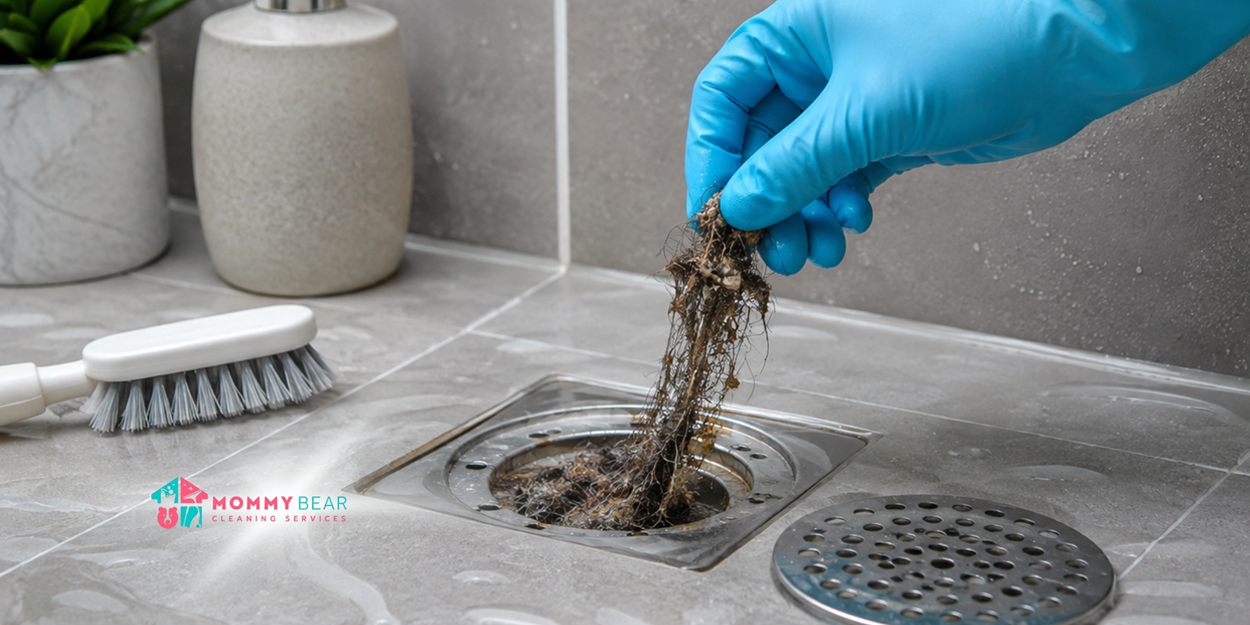
- Clean and disinfect the sink, taps, and drain — descale taps if you notice white buildup
- Sweep and mop the floor, including under table and around bin area
- Wipe light switches and door handles
- Empty and clean the bin
Bathrooms (10 minutes per bathroom)
- Clean and disinfect toilet — bowl (including under the rim), seat, exterior, and base
- Clean shower screen, tiles, and tapware
- Clean vanity, basin, mirror, and taps
- Mop the floor
- Wipe towel rails and door handles
- Check the exhaust fan grille — wipe if dusty
Bedrooms (5 minutes per bedroom)
- Dust bedside tables, shelves, and windowsills
- Vacuum the floor, including along skirting boards
- Change bed linen (weekly or fortnightly depending on household — weekly for allergy sufferers)
Living and Dining Areas (10 minutes)
- Dust all accessible surfaces — TV unit, coffee table, shelving, sideboards
- Vacuum carpet and rugs, including under coffee tables
- Sweep and mop hard floors
- Wipe glass surfaces and mirrors
- Wipe light switches and door handles
Laundry (3 minutes)
- Wipe benchtops and appliance exteriors
- Clean the laundry tub and taps
- Sweep or mop the floor
Throughout the Home (5 minutes)
- Vacuum hallways and stairs
- Quick cobweb check in corners and around light fittings (use the long-reach attachment)
- Wipe front door handle — the most touched surface in the house
Time-saving tip: Two people doing the weekly clean together cuts it to 25-30 minutes. One handles wet rooms (kitchen, bathrooms), the other handles dry rooms (bedrooms, living areas, floors). In a family home, kids aged 6-10 can handle their own bedrooms, toy pickup, and bin emptying.
Monthly Tasks (60-90 Minutes — Pick a Weekend)
These are the tasks that prevent “invisible buildup” — the grime that forms so gradually you stop noticing it until a visitor walks in and you see your home through fresh eyes.
Kitchen
- Clean inside the microwave (a bowl of water with lemon microwaved for 3 minutes loosens everything — wipe clean)
- Wipe inside the fridge — shelves, drawers, door seals, and the drip tray
- Run an empty dishwasher cycle with a dishwasher cleaner or white vinegar
- Wipe the top of the fridge and rangehood (grease collects here invisibly)
- Clean inside the bin — not just emptying it, washing it
Bathrooms
- Scrub tile grout — this is where mould gains a foothold, especially in Melbourne’s winter humidity
- Descale showerhead (soak in white vinegar overnight)
- Clean exhaust fan blades and housing
- Wipe bathroom cabinet interiors
Bedrooms
- Vacuum under beds (dust bunnies, lost socks, and allergens accumulate here faster than anywhere)
- Wipe wardrobe interiors — shelves and hanging rails
- Flip or rotate mattress (extends mattress life and prevents body impressions)
Living Areas
- Dust skirting boards throughout the home — run a damp cloth along each one
- Wipe ceiling fan blades
- Clean window sills and tracks (a vacuum crevice attachment followed by a damp cotton bud in the corners)
- Wipe all door frames and light fittings
- Vacuum upholstered furniture — cushion crevices, armrests, under cushions
Laundry
- Run an empty hot wash cycle in the washing machine with white vinegar to clear buildup and odour
- Clean the washing machine door seal (front-loaders) or rim (top-loaders)
- Clean the lint filter housing in the dryer
Throughout
- Clean all interior glass — windows, glass doors, mirrors (a microfibre cloth and glass cleaner, wiped in S-shaped strokes, leaves zero streaks)
- Wipe all power points and light switches (these are among the most bacteria-laden surfaces in any home)
- Check smoke detector batteries
The task most people skip: Skirting boards. They collect dust constantly, and once the layer is visible it changes how your entire room looks. A damp microfibre cloth along each skirting board takes 10 minutes for an average home and makes a disproportionate difference to how clean your house feels.
Seasonal Tasks (Quarterly — or Hand Them to a Professional)
These are the tasks that separate a “maintained” home from a genuinely clean one. Most families don’t have the time, the equipment, or the energy to do these quarterly — and that’s exactly why professional deep cleaning exists. We handle every one of these as part of our one-off deep cleaning service.
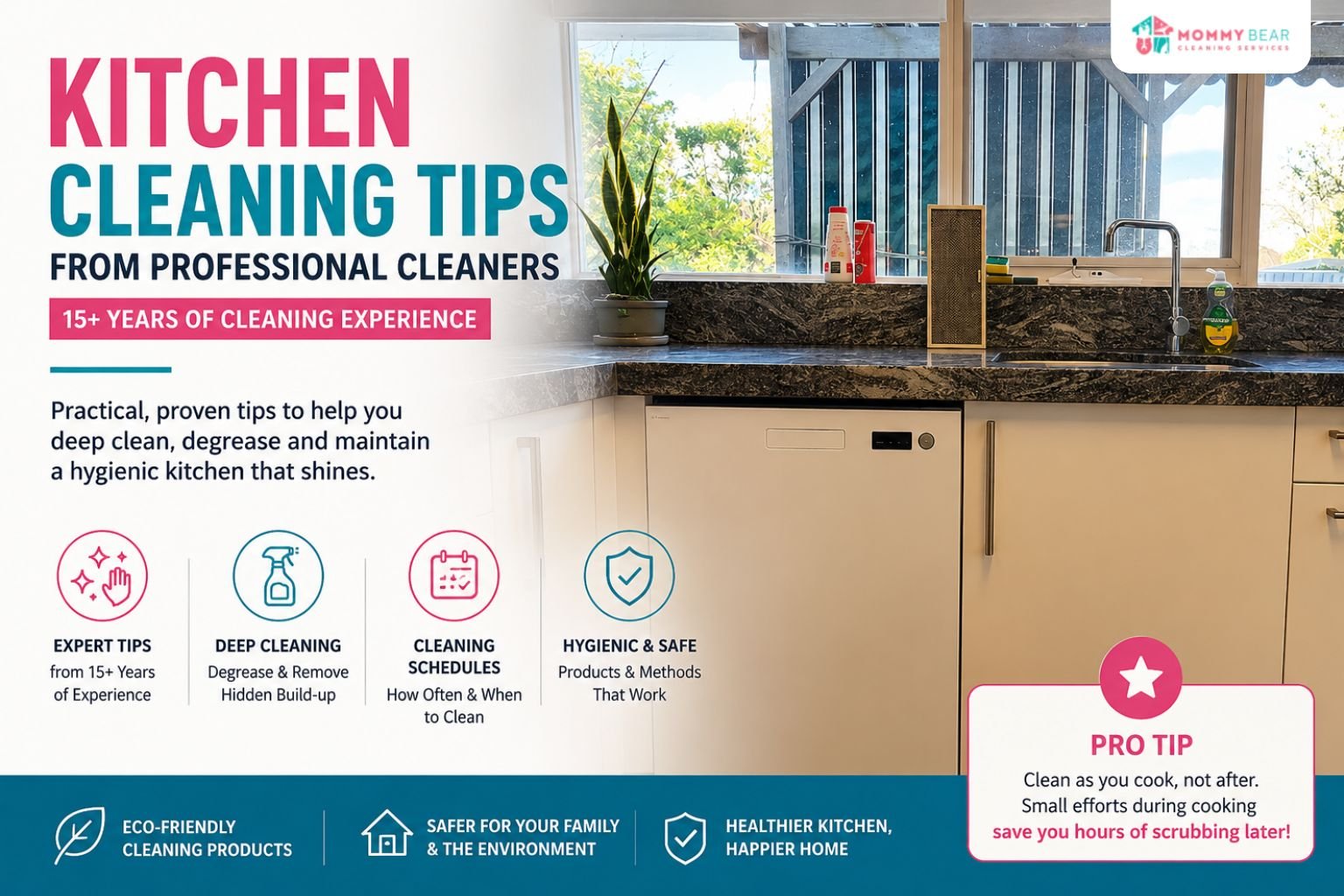
Kitchen (Quarterly)
- Deep clean the oven — interior walls, racks, door glass, and door seal
- Degrease the rangehood filter (soak in hot water with dishwashing liquid, or replace if disposable)
- Pull out the fridge and clean behind and underneath it
- Clean inside all kitchen cupboards and drawers — wipe shelves, check for expired items
- Descale the kettle and coffee machine
Bathrooms (Quarterly)
- Deep clean all tile grout with a grout-specific cleaner
- Clean or replace silicone seals showing mould
- Descale all taps and shower fittings thoroughly
- Wash shower curtain or deep-clean shower screen tracks
Bedrooms (Quarterly)
- Wash all pillows and doonas (check care labels — most can go through a gentle cycle)
- Vacuum the mattress surface and treat any stains
- Wash or dry-clean curtains and blinds
Living Areas (Quarterly)
- Move furniture and clean behind and underneath (this is where dust bunnies and lost items accumulate undisturbed)
- Clean all windows — interior and exterior glass, frames, sills, and tracks
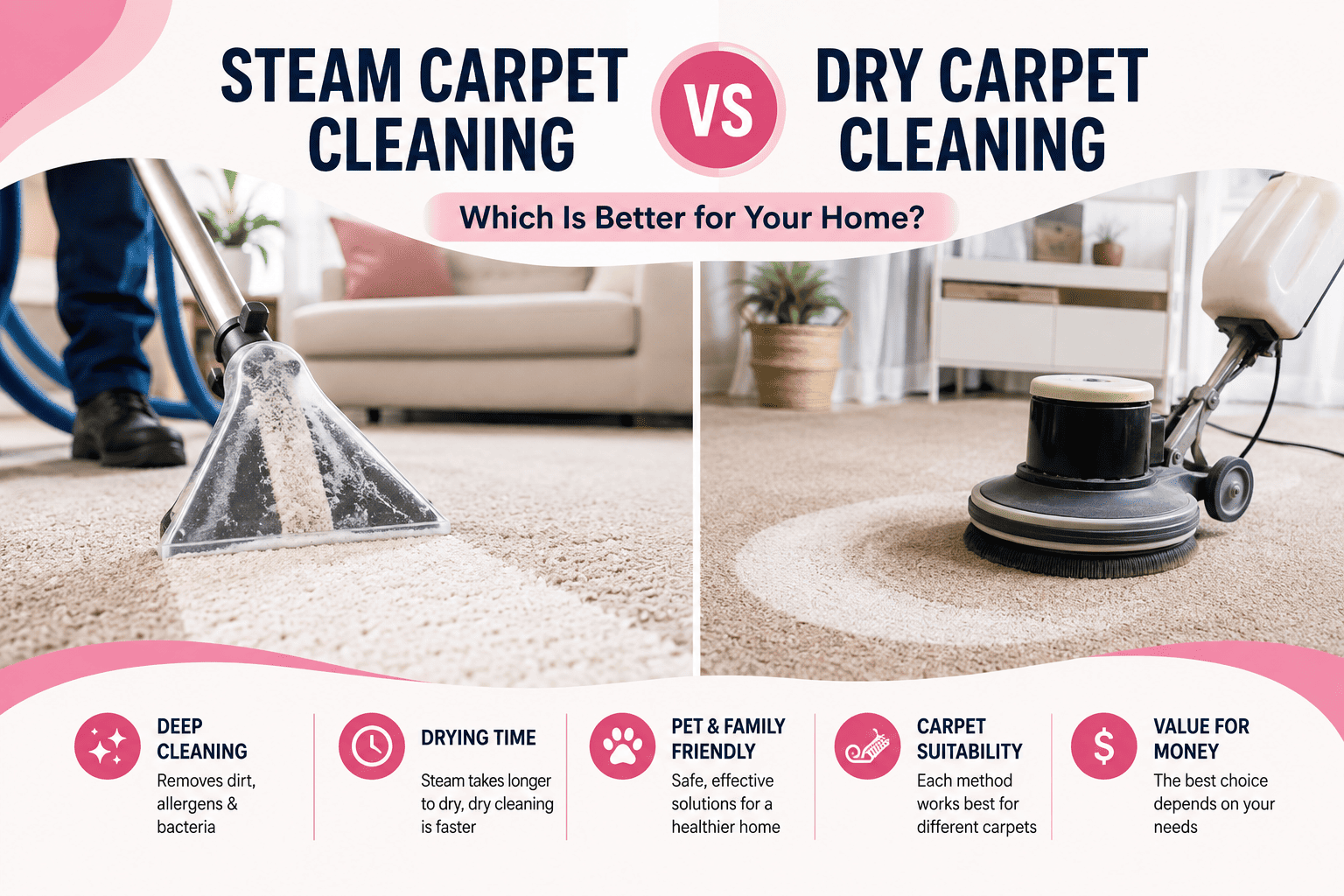
- Professionally steam clean carpets (or vacuum with a HEPA vacuum for a maintenance alternative)
- Wash cushion covers and throw blankets
Outdoor Areas (Seasonally)
- Sweep and clean the balcony, patio, or alfresco area
- Clean exterior windows (inside and out)
- Clear gutters of leaves and debris (especially in late autumn and late spring)
- Wipe outdoor furniture and BBQ
- Sweep the garage floor
Throughout (Seasonally)
- Wash all interior walls (spot clean marks and scuffs — or full wash if needed)
- Clean all air conditioning vents and return air grilles
- Dust and clean light fixtures
- Clean behind the washing machine and dryer
- Reorganise linen cupboard and discard worn items
Honest advice from Himaya: “Most of our regular clients handle the daily and weekly tasks themselves and book us fortnightly to do the thorough version of the weekly clean — plus rotate through the monthly tasks so nothing builds up. Then every 3-6 months, they book a one-off deep clean and we knock out the entire seasonal list in one visit. It’s the combination that keeps a home properly clean without it consuming your weekends.”
Cleaning Tasks for Homes With Pets
If you have dogs, cats, or both, these additional tasks prevent the fur, dander, and odour buildup that standard checklists don’t address.
Daily: Wipe paws after walks (especially during muddy Melbourne winters). Sweep or vacuum pet feeding areas. Remove pet hair from furniture with a lint roller or rubber glove.
Weekly: Vacuum all floors and upholstered furniture with a pet-hair-rated vacuum (regular vacuums clog quickly with animal hair). Wash pet bedding. Mop hard floors with a pet-safe floor cleaner.
Monthly: Steam clean or hot-water-extract carpets in high-pet-traffic areas. Wash pet toys. Clean pet crates or kennels.
Quarterly: Professional carpet cleaning with pet-specific enzymatic treatment to eliminate embedded dander and odour that regular cleaning doesn’t reach.
Cleaning Tasks for Allergy and Asthma Sufferers
Australian homes face specific allergy challenges — dust mites (the most common asthma trigger in Australia), grass pollen (particularly during Melbourne’s October-December pollen season), and mould spores (amplified by winter humidity). If anyone in your household has allergies or asthma, add these to your routine:
Daily: Run the bathroom exhaust fan during and for 20 minutes after showers to reduce moisture that feeds mould.
Weekly: Wash all bedding in hot water (60°C kills dust mites — warm water doesn’t). Vacuum with a HEPA-filter vacuum, not a standard one (standard vacuums recirculate fine particles). Damp-dust all surfaces rather than dry dusting, which disperses allergens into the air.
Monthly: Vacuum the mattress surface. Clean air conditioning filters. Wipe window frames and sills where condensation creates mould-friendly conditions during winter.
Quarterly: Professional hot-water extraction carpet cleaning — the only method that reaches deep enough to remove embedded dust mite allergens. Replace or thoroughly wash all pillows.
The Products You Actually Need (And the Ones You Don’t)
You don’t need a different product for every surface. Here’s what professional cleaners actually carry — and what does the work of the 15 specialty bottles under your kitchen sink.
The essentials (5 products that cover everything):
- All-purpose spray — for benchtops, appliances, cabinets, and general surfaces (choose an eco-friendly, non-toxic option if you have children or pets)
- Glass cleaner — for windows, mirrors, and glass surfaces
- Bathroom cleaner — a mildly acidic formula that dissolves soap scum and hard water without scrubbing
- Toilet cleaner — for bowl cleaning and disinfection
- Floor cleaner — matched to your floor type (pH-neutral for timber and hybrid; general for tile and vinyl)
The tools that make the difference:
- Microfibre cloths (at least 6 — colour-coded: one for kitchen, one for bathrooms, one for glass, one for general) — microfibre picks up more dirt with less product than any other cloth
- A good vacuum with HEPA filtration — the single most important cleaning tool in your home
- A flat mop with washable pads — faster and more hygienic than a string mop
- A scrubbing brush — for grout, oven racks, and anything that needs mechanical agitation
- A squeegee — for the daily shower screen wipe that prevents soap scum from ever forming
What you don’t need: Expensive specialty products for every surface. Antibacterial sprays for general cleaning (soap and water remove bacteria effectively — antibacterial products are unnecessary for most household cleaning and contribute to chemical resistance). Scented “cleaning” sprays that mask odour rather than removing the source.
When to Clean It Yourself — and When to Call a Professional
Not every cleaning task needs a professional. But some tasks are genuinely better handled by someone with commercial equipment, trained technique, and time to do it properly.
Handle yourself: Daily maintenance, weekly surface cleaning, spot stain treatment, general tidying, and basic kitchen and bathroom upkeep.
Consider a professional for: Oven deep cleaning (professional degreasers and technique reach results DIY products can’t). Carpet steam cleaning (commercial hot-water extraction removes what household machines leave behind). Window cleaning — interior and exterior including tracks and frames. Tile grout scrubbing (professional rotary tools restore grout colour in a fraction of the time). Any task you’ve been putting off for months because it feels too big to start.
Definitely hire a professional for: End-of-lease cleaning (bond-back standards require equipment and thoroughness that DIY rarely achieves). Post-renovation cleaning (construction dust requires HEPA extraction). Homes that haven’t been deep cleaned in over 12 months (the accumulated buildup needs commercial-grade treatment to reset).
If the weekly clean feels manageable but the monthly and seasonal tasks keep slipping, a fortnightly professional clean combined with your daily maintenance is the most effective approach. Most of our regular clients across Officer, Pakenham, Berwick, and surrounding suburbs follow exactly this model.
Frequently Asked Questions
What should be on a house cleaning to-do list?
A complete house cleaning to-do list covers daily tasks (benchtop wipes, dishes, bed-making), weekly tasks (vacuuming, mopping, bathroom cleaning, dusting), monthly tasks (inside microwave, grout scrubbing, skirting boards, window tracks), and seasonal tasks (oven deep clean, behind furniture, carpet steam cleaning, window washing). Organising by frequency rather than one massive list makes it usable.
How do I clean my house room by room?
Start in the kitchen (highest contamination area), then bathrooms, then bedrooms, then living areas, then floors. Within each room, work top to bottom and dry tasks before wet tasks. This order prevents cross-contamination and avoids re-cleaning surfaces that dust falls onto from above.
How often should I deep clean my house?
Most Australian households benefit from a professional deep clean every 3-6 months, with weekly surface cleaning in between. Homes with children, pets, or allergy sufferers should deep clean more frequently — every 3 months for high-traffic areas and carpets.
What cleaning tasks should be done daily?
The essential daily tasks are: wipe kitchen benchtops and stovetop, load the dishwasher, wipe bathroom vanity, squeegee the shower screen, make beds, put clothes in the hamper, and start one load of laundry. These take under 10 minutes combined and prevent mess from accumulating.
What is the most efficient order to clean a house?
Professionals clean in this order: declutter first, then work room by room starting with the kitchen. Within each room, clean top to bottom (ceiling fans and shelves before floors) and dry before wet (dusting before wiping, vacuuming before mopping). This prevents re-contamination and eliminates backtracking.
How long should it take to clean a 3-bedroom house?
A thorough weekly clean of a standard 3-bedroom home takes approximately 45-75 minutes for one person working systematically, or 25-35 minutes with two people dividing rooms. A full deep clean takes 4-6 hours. A professional team typically completes a thorough clean in 2-3 hours.
Your Home Deserves a System, Not a Marathon
The difference between a home that feels permanently messy and one that stays consistently clean isn’t effort — it’s structure. Ten minutes of daily maintenance, 45 minutes of weekly cleaning, and a professional deep clean every quarter keeps any family home at a standard that weekends-long cleaning marathons never sustain.
If you’re in Melbourne’s south-east — Officer, Pakenham, Berwick, Narre Warren, Cranbourne, or surrounding suburbs — Mommy Bear Cleaning Services handles the weekly clean, the deep clean, or anything in between with our 40-point professional checklist, eco-friendly products, and the same trusted cleaner every visit.
📞 Call Himaya: 0449 626 424 🌐 Free quote: mommybearcleaning.com.au/contact-us
10% off your first clean. Currently serving Officer, Pakenham, Berwick, Beaconsfield, Narre Warren, Cranbourne, Clyde, Clyde North, Hallam, Hampton Park, Dandenong, and all suburbs across greater Melbourne.
Written by Himaya Hamy, founder of Mommy Bear Cleaning Services — 15 years of professional house cleaning experience across Melbourne’s south-east. Every task, time estimate, and product recommendation in this guide comes from cleaning real family homes, not recycled internet lists.