
Let’s be honest—the kitchen is the heart of the home, but it’s also the hardest working room in the house. Between school lunch prep, family dinners, and the occasional entertaining spree, grease and grime have a way of building up in places we don’t always look.
While a quick wipe-down keeps things tidy day-to-day, a true kitchen deep clean goes much further. It involves tackling the hidden gunk inside your oven, the limescale on your sink, and the sticky residue that settles on top of your cupboards.
For homeowners here in Pakenham—especially those dealing with the dust from new estate developments or the hustle of family life in Heritage Springs—keeping a pristine kitchen can feel like a big job. Whether you’re planning a weekend DIY blitz or just want to know what the pros do, this guide breaks down exactly how to restore your kitchen to a sparkling, hygienic state.
Why Deep Cleaning Your Kitchen Matters in Pakenham
You might wipe your benches daily, but deep cleaning isn’t just about aesthetics; it’s about health and home maintenance.
Health & Hygiene
Kitchens are prime real estate for bacteria. Crumbs hidden in toaster trays or moisture trapped behind the sink can become breeding grounds for germs. A deep clean sanitises these “forgotten” areas, ensuring the food you prepare for your family is safe.
Allergen & Dust Removal
If you live in some of Pakenham’s newer estates like Arcadia or Timbertop, you know that construction dust (and that stubborn red dust!) manages to find its way inside. It settles on top of cabinets and fridge coils, potentially triggering allergies. Deep cleaning removes these layers that regular dusting misses.
Stain & Damage Prevention
Grease is acidic. If left too long on your splashback or cupboard fronts, it can eat into the finish, causing permanent discolouration. Regular deep cleaning extends the life of your expensive joinery and appliances.
Kitchen Deep Cleaning Checklist – Step by Step
Ready to roll up your sleeves? Here is the strategy we use to tackle kitchens effectively.
Sinks & Drains: Banishing Bacteria and Smells
Your sink sees everything from raw meat juices to coffee dregs.
- Degreasing: Fill the sink with hot water and a cup of vinegar. Let it sit to loosen grime, then scrub with a non-scratch sponge and dish soap.
- Hard Water Stains: Pakenham water can leave mineral deposits. A paste of baking soda and lemon juice works wonders on stainless steel taps—just rinse thoroughly to reveal the shine.
- The Drain: Pour half a cup of baking soda down the drain, followed by a cup of vinegar. Cover it for 10 minutes while it fizzes, then flush with boiling water to clear buildup.
Oven & Stove Top: Cutting Through the Grease
This is often the most dreaded task, but it makes the biggest difference.
- Oven Racks: Remove them and soak them in warm, soapy water (the bathtub is often the best place for this).
- The Interior: If you prefer eco-friendly methods over harsh chemicals, apply a baking soda paste to the oven walls and let it sit overnight. Spray with vinegar the next day and wipe away the foam and grime.
- The Door: Don’t forget the glass! Grease often drips between the glass panels. Many oven doors have clips that allow you to remove the glass for cleaning—check your manual first.
Cupboards & Cabinet Interiors
It’s amazing what hides in the back of a pantry.
- Empty and Assess: Take everything out. Check expiry dates and toss what you don’t need.
- Top-Down Cleaning: Dust the tops of the cupboards first. If there is sticky oil residue, use a degreaser or hot soapy water.
- Shelf-by-Shelf: Wipe the interiors to remove flour dust or spilled spices.
- The Fronts: Drips often run down cabinet fronts near the handle. Wipe these carefully with a damp microfibre cloth to avoid water damage to the laminate or timber.
Benchtops & Backsplash
Clear the clutter—appliances, fruit bowls, mail—so you can clean the entire surface.
- Sanitisation: Use a pH-neutral cleaner appropriate for your stone or laminate.
- Grout Lines: If you have a tiled splashback, the grout often holds grease. A soft toothbrush and a mild cleaning paste can brighten these lines instantly.
Appliances & Fixtures
- Microwave: Steam it clean! Place a bowl of water with lemon slices inside and run it for 3 minutes. The steam softens the splatters, making them easy to wipe away.
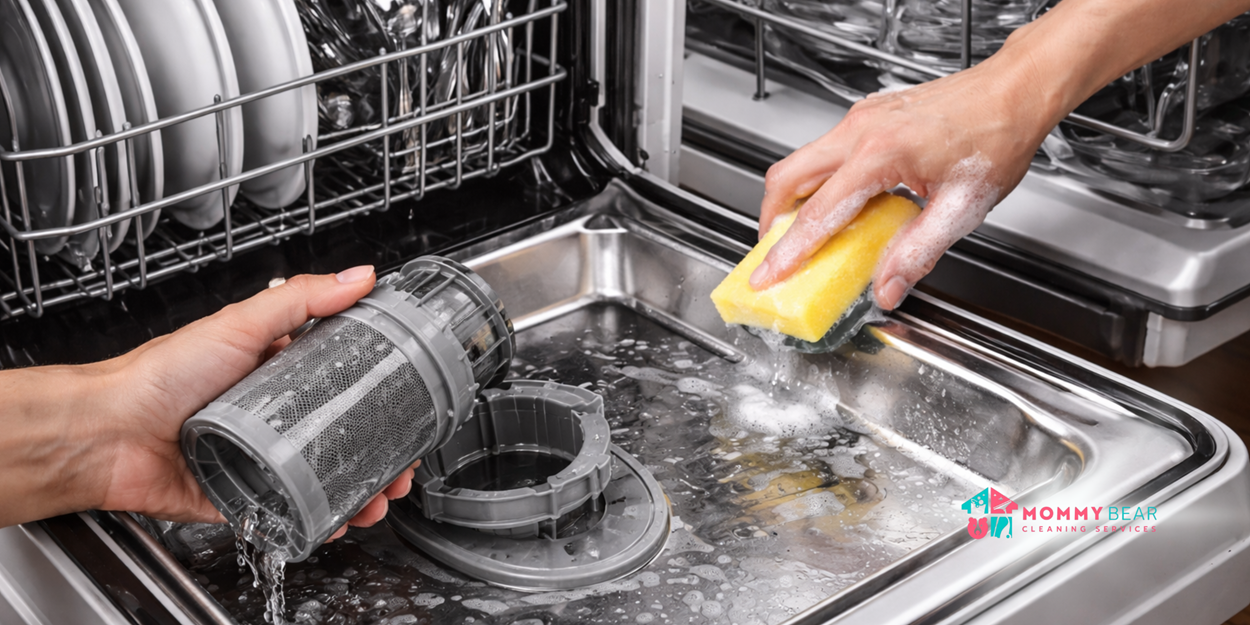
- Rangehood Filters: These are grease magnets. If they are metal mesh, they can usually go in the dishwasher. If they are charcoal filters, they may need replacing.
- Toaster & Kettle: Shake out the crumb tray and wipe the exteriors to remove fingerprints.
Tools & Products That Make Kitchen Deep Cleaning Easier
You don’t need a cupboard full of toxic chemicals to get a professional result. In fact, for many homes in Pakenham Upper or semi-rural areas using septic systems, harsh bleach is a big no-no.
- Microfibre Cloths: Essential for trapping dust rather than spreading it.
- Double-Sided Sponges: Use the soft side for cupboards and the scourer side for oven racks.
- Eco-Friendly Cleaners: We love using natural options like white vinegar, baking soda, and eucalyptus oil. They cut through grease effectively, smell fresh, and are safe for your family and pets.
How Often Should Your Kitchen Be Deep Cleaned?
There is a big difference between your “Sunday night tidy” and a deep clean.
- Routine Cleaning: Wiping benches, rinsing the sink, and sweeping floors should happen daily or every few days.
- Deep Cleaning: We recommend a full kitchen deep cleaning tips session every 3 to 6 months.
However, if you do a lot of frying, have pets, or have a large family, you might need to tackle specific areas like the oven or rangehood more frequently.
When to Hire a Professional Cleaner in Pakenham
Let’s face it—deep cleaning a kitchen is hard physical work. It takes time, elbow grease, and attention to detail.
If you’d rather spend your weekend enjoying a coffee at a local cafe or taking the kids to the park than scrubbing oven racks, we can help. Our team provides a professional one-off kitchen deep clean service that covers everything from the rangehood to the skirting boards. We bring all the supplies, so you don’t have to lift a finger.
FAQs
What is the difference between regular and deep cleaning?
Regular cleaning maintains the surface level of cleanliness (wiping benches, mopping floors). Deep cleaning targets the build-up behind and inside areas, such as inside the oven, scrubbing tile grout, and washing down cupboard fronts.
How long does a kitchen deep clean take?
For a standard family kitchen, a thorough DIY deep clean can take 3–5 hours depending on the condition of the oven and appliances. Our professional teams work efficiently to get it done faster.
Are your cleaners insured?
Absolutely. Mommy Bear Cleaning is a fully insured, police-checked business. We treat your home with the same care and respect we would our own.
Do you bring your own supplies?
Yes, we bring all necessary equipment and eco-friendly products. However, if you have specific products you prefer us to use due to allergies or material warranties, we are happy to use those instead.
Conclusion
A deep-cleaned kitchen doesn’t just look better; it feels healthier and functions better. By following this checklist, you can tackle the grease and grime systematically, ensuring your cooking space remains the welcoming heart of your home.
Short on time or energy? Let the local experts handle the grime. Book your kitchen deep clean with Mommy Bear Cleaning today and come home to a kitchen that sparkles.