Clean carpets aren’t just about appearance — they’re about the air your family breathes. A single square metre of carpet can hold up to one kilogram of trapped dust, dead skin, pet dander, and dust mites before it even looks dirty. In a country where asthma affects around 11% of the population, that hidden load matters more than most homeowners realise.
This guide covers everything you need to know about cleaning and maintaining carpets in an Australian home: the methods professionals actually use, how often you should clean based on your household, the truth about DIY versus professional cleaning, how to handle common stains, and what carpet cleaning costs in 2026.
It’s written from 15 years of hands-on experience cleaning carpets across Melbourne’s south-east — not recycled from overseas websites that don’t understand Australian carpets, climate, or conditions.
Why Carpet Cleaning Matters More Than You Think
Vacuuming removes surface dirt. It does nothing for what’s embedded deep in the fibres and backing.
Over months, carpets accumulate a hidden reservoir of:
- Dust mites — microscopic creatures that feed on dead skin and trigger asthma and allergies. Dust mites are one of Australia’s most common asthma triggers.
- Pet dander and hair — woven deep into fibres where vacuums can’t reach
- Fine dust and pollen — particularly heavy during Australian spring pollen seasons
- Bacteria and mould spores — which thrive in humidity and spilled organic matter
- Ground-in soil — tracked in from outside and compacted by foot traffic
This buildup does three things: it degrades your indoor air quality, it wears your carpet out prematurely (grit acts like sandpaper on the fibres every time you walk on it), and it creates the conditions for allergies, respiratory irritation, and persistent odours.
Regular professional cleaning reverses all three. It’s not a luxury — it’s basic home maintenance, the same as servicing your car or cleaning your gutters.
How Often Should You Clean Your Carpets?
The right frequency depends on your household. Here’s the realistic guide based on manufacturer recommendations and Australian living conditions.
| Household Type | Recommended Professional Cleaning Frequency |
|---|---|
| Single person or couple, no pets | Every 12-18 months |
| Family with children | Every 6-12 months |
| Households with pets | Every 6 months |
| Allergy or asthma sufferers | Every 3-6 months |
| High-traffic areas (hallways, lounge) | Every 6 months |
| Rental property (end of lease) | Before every final inspection |
Important: Most carpet manufacturers require proof of professional cleaning every 12-18 months to keep your warranty valid. If you’ve never cleaned your carpet and a fault appears, the manufacturer may void the warranty. Keep your cleaning receipts.
Between professional cleans, vacuum at least once a week — twice in high-traffic areas and homes with pets. Use a vacuum with a HEPA filter to capture fine particles rather than recirculating them into the air.
The Main Carpet Cleaning Methods Explained
Not all carpet cleaning is the same. The right method depends on your carpet type, the level of soiling, and how quickly you need it dry. Here’s what professionals actually use in Australia.
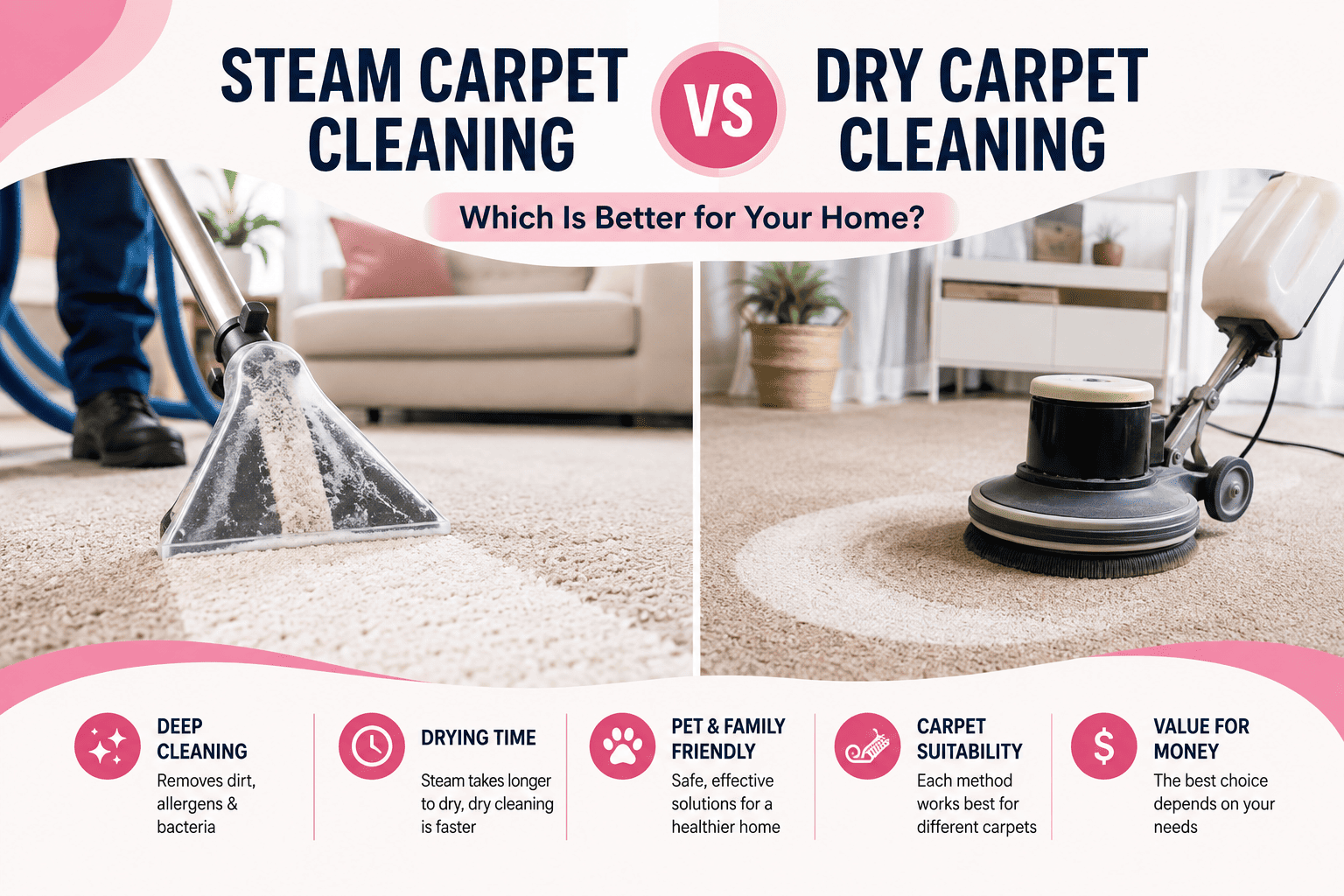
Hot Water Extraction (Steam Cleaning)
This is the most common and most effective professional method — and the one most carpet manufacturers recommend.
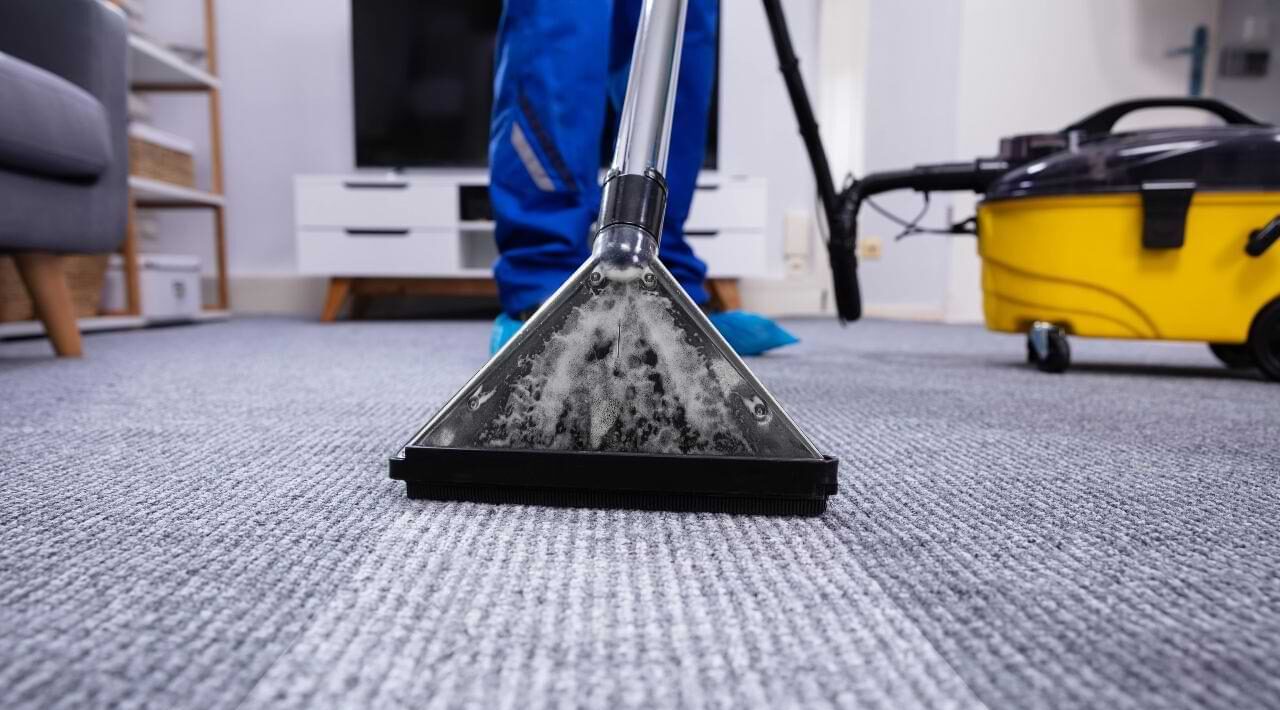
Hot water and a cleaning solution are injected deep into the carpet under high pressure, then immediately extracted along with the dissolved dirt, allergens, and bacteria.
- Best for: Deep cleaning, allergen removal, heavily soiled carpets, most residential carpet types
- Drying time: 4-8 hours (longer in winter or humid conditions)
- Strengths: Removes the deepest dirt, kills dust mites, extracts embedded allergens, industry-standard results
- Considerations: Requires proper extraction and ventilation to avoid leaving carpet too wet
Despite the common name “steam cleaning,” the process doesn’t actually use steam — it uses hot water under pressure. The terms are used interchangeably in Australia.
Dry Carpet Cleaning (Encapsulation)
A low-moisture method using cleaning compounds or crystallising detergents that bind to dirt particles. Once dry, the encapsulated dirt is vacuumed away.
- Best for: Quick-dry needs, commercial spaces that can’t close, regular maintenance cleans
- Drying time: 1-2 hours (the fastest option)
- Strengths: Minimal moisture means no mould risk, fast return to use, good for routine upkeep
- Considerations: Doesn’t reach as deep as hot water extraction for heavily soiled carpets
Bonnet Cleaning
A heavy-duty machine with absorbent pads soaked in cleaning solution removes dirt from the carpet’s top surface.
- Best for: High-traffic commercial areas needing a quick surface refresh
- Strengths: Fast, low moisture
- Considerations: Surface-level only — not a deep clean
Carpet Shampooing
A foaming detergent is worked into the carpet, then vacuumed once dry.
- Best for: Heavily soiled carpets as a pre-treatment
- Considerations: Can leave residue if not properly rinsed, which attracts dirt faster afterward
For most Australian homes, hot water extraction is the gold standard — it delivers the deepest clean, removes the most allergens, and is recommended by the majority of carpet manufacturers.
DIY vs Professional Carpet Cleaning: The Honest Comparison
You can hire a carpet cleaning machine from the supermarket for around $80-$120 a day. Should you?
Here’s the honest breakdown.
| Factor | DIY (Hired Machine) | Professional |
|---|---|---|
| Cleaning power | Consumer-grade suction and heat | Commercial truck-mount or high-powered portable units — far deeper extraction |
| Water extraction | Limited — often leaves carpet very wet | Powerful extraction — carpet dries faster, lower mould risk |
| Drying time | 12-24+ hours (over-wetting is common) | 4-8 hours |
| Stain treatment | Generic supermarket solution | Stain-specific professional treatments |
| Risk | Over-wetting causes mould, watermarks, and backing damage | Trained technicians control moisture precisely |
| Cost | $80-$120 machine hire + solution + your time (3-5 hours) | Flat professional rate, done for you |
| Result | Surface improvement | Deep clean to manufacturer standard |
The most common DIY mistake is over-wetting. Hired machines lack the extraction power to remove the water they put in. The result is carpet that stays damp for a day or more, which leads to mould growth, watermarks, and a musty smell that’s worse than the original problem — plus potential damage to the carpet backing and underlay.
For routine surface freshening, DIY can work. For a genuine deep clean, allergen removal, or end-of-lease standard, professional hot water extraction is the safer and more effective choice.
How to Handle Common Carpet Stains
Speed matters more than anything with stains. The faster you act, the better the outcome. Here’s how to handle the most common Australian household stains.
The golden rule: blot, never rub. Rubbing pushes the stain deeper and spreads it. Always blot from the outside of the stain inward using a clean white cloth.
Red Wine
Blot immediately. Apply a small amount of cold water and continue blotting. For dried stains, a mix of one tablespoon dishwashing liquid, one tablespoon white vinegar, and two cups of warm water applied gently and blotted often lifts it. Avoid hot water, which sets the stain.
Coffee and Tea
Blot up the liquid, then apply the vinegar-and-dishwashing-liquid solution above. Coffee leaves a yellowish tint if left, so treat it quickly.
Pet Urine
Blot thoroughly, then treat with an enzymatic cleaner specifically designed for pet stains. Enzyme cleaners break down the proteins that cause both the stain and the odour. Avoid ammonia-based products — they smell like urine to pets and encourage repeat marking.
Mud and Dirt
Let it dry completely first. Then vacuum up the loose dirt before treating any remaining mark with the vinegar solution. Treating wet mud spreads it.
Blood
Use cold water only — hot water sets blood permanently. Blot with cold water and a little dishwashing liquid.
Oil and Grease
Sprinkle bicarbonate of soda over the stain to absorb the oil, leave for 15 minutes, vacuum, then treat with dishwashing liquid solution.
When to call a professional: large stains, set-in stains, pet urine that has soaked into the underlay, or anything on wool or natural-fibre carpets. The wrong DIY treatment on these can cause permanent damage.
How Carpet Type Affects Cleaning
Not all carpets can be cleaned the same way. Using the wrong method or product can cause shrinkage, colour bleeding, or permanent damage.
- Nylon and polyester (synthetic): The most common and most durable. Tolerates hot water extraction well. The easiest to clean.
- Wool (natural): Requires gentle, pH-neutral products and careful moisture control. Hot water that’s too hot can cause shrinkage. Always use a professional experienced with wool.
- Polypropylene (olefin): Stain-resistant but holds oily soil. Responds well to hot water extraction.
- Blends: Treatment depends on the dominant fibre — a professional will identify this before cleaning.
If you’re unsure of your carpet type, a professional cleaner will identify it and select the safe, appropriate method. This is one of the biggest advantages of professional cleaning over DIY — avoiding irreversible damage to an expensive carpet.
How Much Does Carpet Cleaning Cost in Australia (2026)?
Carpet cleaning pricing in Australia is structured three ways: per room, per square metre, or per hour. Here’s what homeowners are paying in 2026.
| Pricing Structure | Typical 2026 Range |
|---|---|
| Per room | $30 – $80 per room |
| Per square metre | $4 – $10 per m² |
| Per hour | $35 – $85 per hour |
| Standard 3-bedroom home | $150 – $300 |
Factors that affect your final price:
- Home size — larger areas cost more, though per-square-metre rates often drop for bigger jobs
- Carpet condition — heavy stains, pet odours, or built-up dirt require extra pre-treatment
- Cleaning method — hot water extraction typically costs more than dry cleaning but delivers a deeper result
- Access — multi-storey homes, furniture moving, and difficult access add time
- Add-ons — stain protection, deodorising, and pet treatment are usually priced separately
- Carpet type — wool and cotton carpets may cost around 30% more due to specialist care requirements
Wool and natural-fibre carpets sit at the higher end because they require gentler products and more careful handling.
How to Make Your Carpets Last Longer
Professional cleaning is only part of carpet care. These habits extend the life of your carpet between cleans:
- Vacuum weekly (twice weekly in high-traffic areas and pet households) using a HEPA-filter vacuum
- Use doormats at every entrance — most carpet soil is tracked in from outside
- Adopt a no-shoes policy indoors to dramatically reduce grit and soil
- Treat spills immediately — blot, don’t rub, and act within minutes
- Rotate furniture periodically to even out wear patterns
- Use furniture coasters to prevent permanent indentations
- Address pet accidents fast with enzymatic cleaners before they soak into the underlay
- Book professional cleaning on schedule based on your household type (see the frequency guide above)
Grit is the enemy. Every particle of trapped soil acts like sandpaper, grinding against the fibres every time you walk across the carpet. Regular vacuuming and professional cleaning remove that abrasive load and add years to your carpet’s life.
Why Melbourne Families Trust Mommy Bear for Carpet Cleaning
If you’re in Melbourne’s south-east — Officer, Pakenham, Berwick, Narre Warren, Cranbourne, or surrounding suburbs — Mommy Bear Cleaning Services delivers professional carpet cleaning that protects your carpet, your warranty, and your family’s health.
- Hot water extraction using commercial-grade equipment for the deepest clean and fastest drying
- Eco-friendly, non-toxic products — safe for children, pets, and allergy sufferers
- Pet stain and odour specialists — enzymatic treatments that eliminate both stain and smell
- Carpet-type expertise — we identify your fibre and select the safe, correct method every time
- End-of-lease carpet cleaning — meeting REIV bond inspection standards with documented receipts
- Family-owned, police-checked, fully insured — 15 years of local experience
- 100% satisfaction guarantee — if you’re not happy, we make it right
📞 Call Himaya: 0449 626 424 🌐 Free quote: mommybearcleaning.com.au/contact-us
Frequently Asked Questions
How often should carpets be professionally cleaned?
Most households should professionally clean carpets every 12-18 months. Families with children should clean every 6-12 months, pet owners every 6 months, and allergy sufferers every 3-6 months. Most carpet manufacturers also require professional cleaning every 12-18 months to keep your warranty valid.
How long does carpet take to dry after cleaning?
After hot water extraction (steam cleaning), carpets typically take 4-8 hours to dry, though this extends in winter or humid conditions. Dry cleaning methods like encapsulation dry in 1-2 hours. Good ventilation, fans, and avoiding foot traffic speed up drying.
Is steam cleaning or dry cleaning better for carpets?
Hot water extraction (steam cleaning) delivers a deeper clean and removes more allergens, making it the best choice for most homes and the method most carpet manufacturers recommend. Dry cleaning is better when you need a fast-drying option or are cleaning commercial spaces that can’t close.
Can professional carpet cleaning remove old stains?
Many old stains can be significantly improved or removed with professional stain-specific treatments, though results depend on the stain type, how long it’s been set, and the carpet fibre. Pet urine that has soaked into the underlay, dye stains, and bleach damage may be permanent. A professional will assess realistically before treating.
Does carpet cleaning remove dust mites and allergens?
Yes. Hot water extraction reaches high enough temperatures to kill dust mites and flushes out the allergens, dander, and fine particles embedded deep in carpet fibres that vacuuming alone cannot remove. This is why regular professional cleaning is recommended for asthma and allergy sufferers.
Will cleaning damage my carpet?
Not when done correctly by a professional who matches the method to your carpet type. The main risk comes from DIY over-wetting (causing mould and backing damage) or using the wrong products on wool and natural fibres (causing shrinkage or colour bleeding). A professional controls moisture precisely and selects the safe method for your specific carpet.
Protect Your Carpets — and Your Family’s Health
Your carpet is one of the largest investments in your home, and one of the biggest contributors to your indoor air quality. Regular professional cleaning protects both.
Whether you need a deep refresh for a family home, pet odour removal, allergy-focused cleaning, or end-of-lease carpet cleaning that meets bond inspection standards, Mommy Bear Cleaning Services delivers across Officer, Pakenham, Berwick, and Melbourne’s south-east.
📞 Call Himaya: 0449 626 424 🌐 Get your free quote: mommybearcleaning.com.au/contact-us
Mommy Bear Cleaning Services | 13 Brittanica St, Officer VIC 3809 | 10% off your first clean
Written by Himaya Hamy, founder of Mommy Bear Cleaning Services — 15 years of professional carpet cleaning experience across Officer, Pakenham, Berwick, and greater Melbourne. Every recommendation in this guide comes from hands-on experience cleaning real Australian homes.